Cats: The Jellicle Ball
“What’s a Jellicle Cat?” In 1982, when Cats first prowled onto Broadway, the answer was strange but straightforward. In Cats: The Jellicle Ball, that question lands very differently. Still drawing from T.S. Eliot’s Old Possum’s Book of Practical Cats with music by Andrew Lloyd Webber, this revival trades the junkyard for the Ballroom, reimagining the Jellicle gathering as a high-energy competition of houses, cat-egories, battles, and runways, all in pursuit of achieving legendary status and ascending to the Heaviside Layer.
As you enter the theater, you’re met with the pulse of club music and in the center of the orchestra seats, a velvet rope closing off a Ballroom runway. Scenic designer Rachel Hauck transforms the Broadhurst’s traditional proscenium into a fully immersive, 360-degree environment, first realized in the production’s initial Off-Broadway run. Escorted to your seat, you can already feel the excitement and energy the production is building. Before the lights go down, a commanding voice from one of the ballroom’s guiding forces cuts through: “This is no ordinary Broadway show, this is BALLROOM.” When the lights dim, the audience erupts with cheers, applause, and the unmistakable clack of fans, a sign of high praise in Ballroom culture.
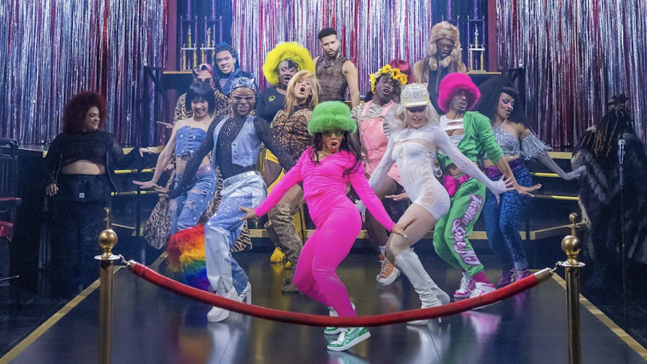
Directed by Zhailon Levingston and Bill Rauch, the opening number has your eyes darting across the theater as you try to catch a first glimpse of each “Cat” delivering their introduction. As the staging reveals its rhythm, it becomes clear that the intention isn’t to spotlight any single character right away. Instead, the direction invites you to take in the ensemble as a whole.
Over the course of the evening, each character’s individuality comes into focus, along with their history and place within the Ball. Levingston and Rauch highlight the uniqueness of each performer while allowing them to bring a piece of themselves to their roles. The revival feels thoughtfully curated, bringing together Broadway and Ballroom legends who have spent their lives in this world, a clear indication that the directors are not only telling the story, but celebrating the artists themselves.
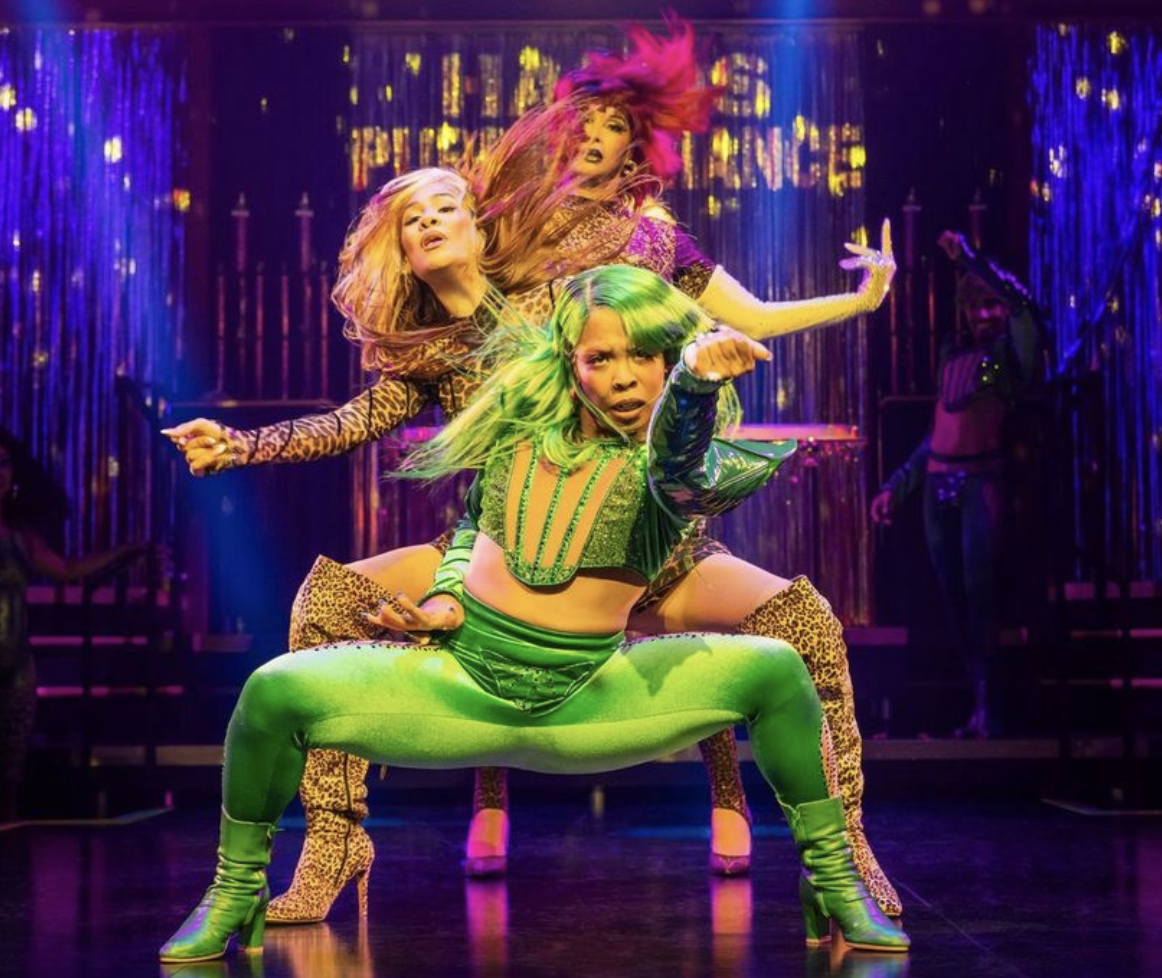
This ensemble of 28 performers sets the ballroom ablaze with such relentless energy that it’s nearly impossible to single out any one standout. Still, the production introduces a vivid lineup of characters along the way. There’s Jennyanydots, the Mother of the House of Dots, performed in full drag by the captivating Xavier Reyes, who glides and twirls across the stage while tending to her kittens. The irresistibly seductive Rum Tum Tugger (Sydney James Harcourt) brings the house down in his featured number of the same name. Robert “Silk” Mason, whose legs go on for days, is Mr. Mistoffelees, moving with such control and ease that it’s truly magical. Bebe Demeter (Nicole Simpson) and Bombalurina (Garnet Williams) absolutely devour their rendition of “Macavity the Mystery Cat,” their powerful voices filling the room.
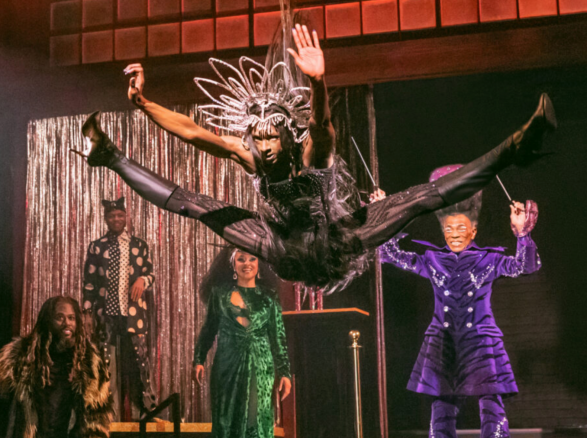
And it’s impossible to ignore DJ Griddlebone, played by Ken Ard, (who originated the role of Macavity in the original Broadway production) kicking things off by placing an original cast recording of Cats onto a turntable and dropping the needle to start the night.
A crucial moment in the opening number, and a perfect example of what makes this revival so striking, comes when the master of ceremonies, Munkustrap (the electric Dudney Joseph Jr.) delivers T.S. Eliot’s poem “The Naming of Cats.” Without altering a word, the performance takes on new resonance, reframing the text through the lens of queer identity. It becomes a reflection of how, within many queer and Ballroom spaces, names can carry layered meaning: the name given at birth, the name one chooses while discovering and affirming who they are, and sometimes a more private name that exists beyond rigid expectations of gender. The moment is handled with clarity and respect, honoring both Eliot’s language and the lived experiences it now evokes.
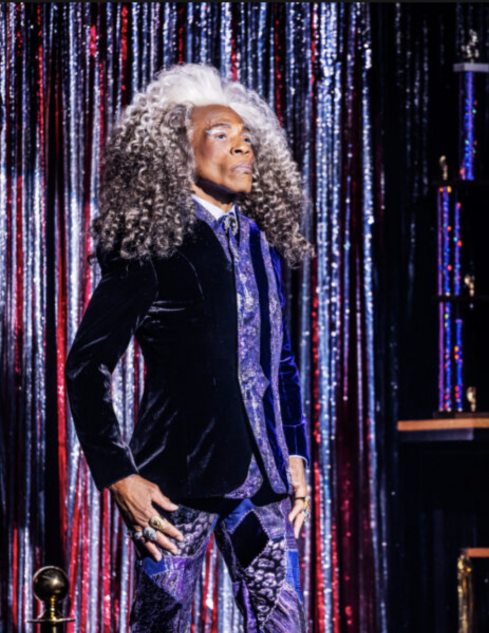
André De Shields steps into the role of Old Deuteronomy, the Jellicle leader, and simply being in the same room as this Broadway legend feels like a gift. He commands the stage the moment he’s revealed, greeted with thunderous applause and a standing ovation. As he’s slowly escorted down the runway, he subverts every expectation with a snap of his fingers. The music surges, and De Shields breaks into voguing and twerking, igniting the room and bringing the party fully to life. Yet beneath that electrifying entrance, his soft, gentle demeanor anchors the performance, offering a warmth that resonates throughout the space.
My personal favorite moment comes with Gus, played by Junior LaBeija, a trailblazer in the Ballroom community for over 50 years. Seated center stage on his blinged-out rolling walker, he gathers the kittens to share his history. As Jellylorum (Bryson Battle) beautifully performs “Gus the Theatre Cat,” the song becomes quietly heartbreaking, elevated by LaBeija’s subtle reactions with just a flick of the hand or a knowing look. It’s one of the show’s most intimate and tender moments.
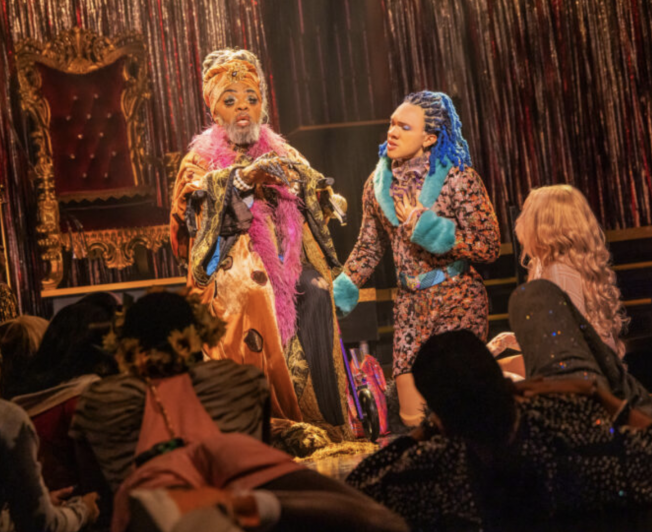
Rounding out the leads is “Tempress” Chasity Moore as Grizabella, the Glamour Cat, the once-celebrated figure now cast aside by the very community she helped define. Her journey is a long and painful one, beginning in isolation and shadow before building to her 11 o’clock number, “Memory.” In that moment, Moore lays bare the character’s heartbreak, capturing the weight of navigating such a journey alone.
The true star of the show is the costume and wig design, curated by costume designer Qween Jean and wig designer Nikiya Mathis. Together, they deliver looks that not only honor iconic Ballroom and club culture, but elevate it to breathtaking new heights, eliciting audible gasps from the audience.
Dynamic choreography by Omari Wiles and Arturo Lyons traces the evolution of Ballroom culture, moving from the controlled precision of Old Way voguing to newer styles that emphasize flexibility, speed, and show-stopping tricks. At times, the movement feels almost improvised, a reflection of Ballroom’s roots, where structure and spontaneity exist side by side. Wiles and Lyons strike that balance beautifully, crafting choreography that feels both intentional and immediate, as if the performers are creating it in the moment.
All in all, this is not your mother’s Cats. Is the technique perfect? No. Are all the vocals flawless? Not always. Do I care? Absolutely not, because this revival is bold, joyful, and unapologetically itself. The Jellicle Ball transforms a familiar title into a vibrant celebration of queer artistry, identity, and community.
At a time when that visibility feels especially vital, this production doesn’t just entertain. It claims space, honors history, and invites audiences to witness a culture that has long deserved the spotlight. It’s fierce, it’s heartfelt, and entirely unforgettable, strutting confidently into its place as a thrilling reimagining of a classic.
Cats: The Jellicle Ball
At the Broadhurst Theatre
235 West 44th St
Running time: 2 hours 25 minutes; one intermission
Through September 6, 2026