Fish
Melis Aker’s new play, Fish, an over-the-top, wild and dangerous coming-of-age dark comedy, is now in a limited engagement for its world premiere at WP Theater. A co-production with Signature Theatre Company, Fish is set in London in 2016 (the year of the Brexit vote).
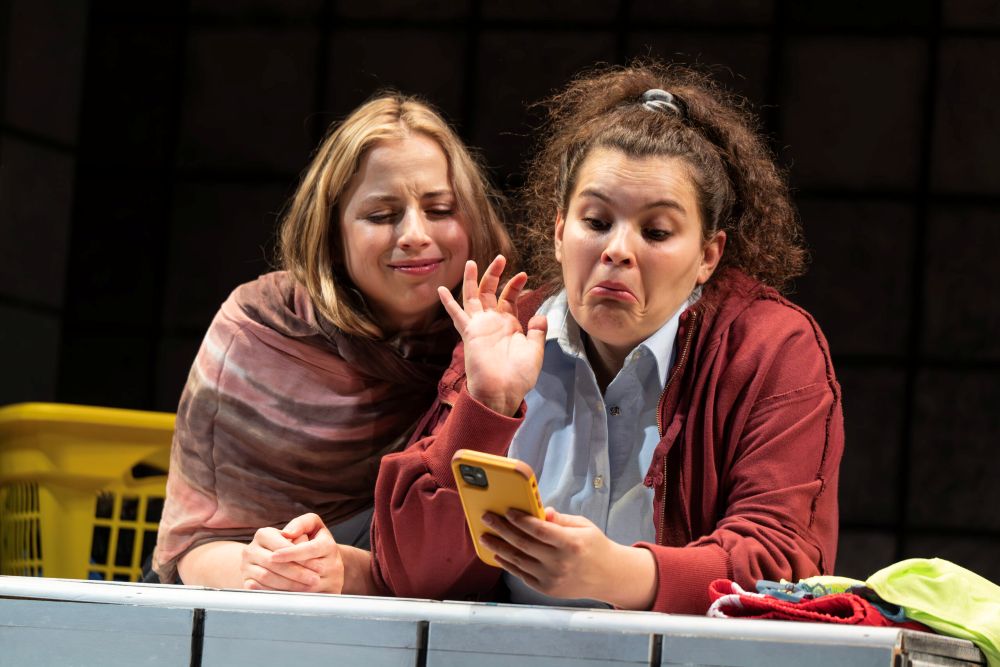
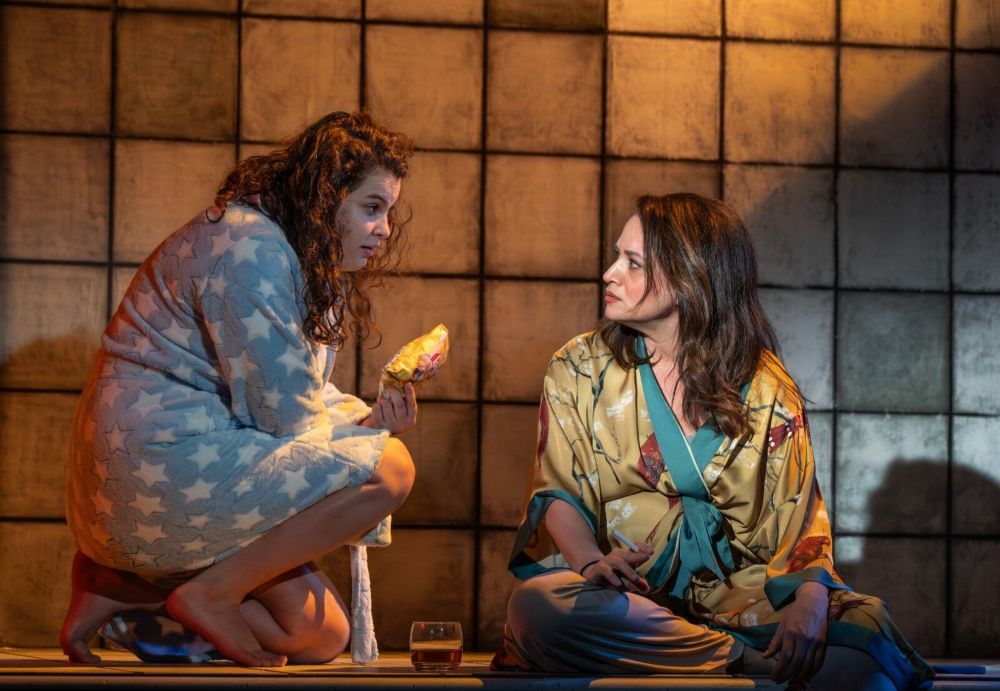
The play follows the story of seventeen-year-old Karya (Yasmin Ranz-Lind) and her best friend Libby (Alyssa May Gold). Karya’s Turkish-born mother, Ceyda (Roxanna Hope Radja) has a theory about the unexplained year-long disappearance of Karya’s brother. Did he join ISIS and is he the masked terrorist seen in an online video? To find out, the girls devise a plan; they undertake a catfishing scheme on the internet, which at first makes them feel powerful and proves lucrative, but could turn into a deadly digital connection.
Directed by Tatiana Pandiani, the cast of five also includes Sara Haider as Isha, the Pakistani ex-girlfriend of her missing brother, and Kario Marcel as Jon, their well-toned swimming instructor at the gym, whose mother is French. The actors convincingly assume the appropriate personalities, ages, and accents of their characters (dialect coaching by Atticus Orsborn) and embrace their combative relationships, sexual awakening, and bad – very bad – decisions (so bad that I found them largely unsympathetic).
The dialogue is loaded with foul language and the stereotype of females who can’t get along and battle with each other. There are also some crude, gratuitous scenes, presumably intended for shock value and laughs, that make jokes of women’s bodies: of Karya’s first menstrual period; a tampon that comes out in the pool; the two besties on the toilet, pulling up their undies without wiping themselves or washing their hands; and Isha positioned to face the audience with her breasts fully exposed (please note that the show does come with a content advisory, warning of “strong language, mature themes, and brief partial nudity”).

Aside from the trashy humor and unlikable behavior, there are some insightful moments in the story: the teens’ raging hormones, and their desperation to be found attractive (the scene of them trying on flashy clothes and striking poses is one of the most visually amusing); Libby leaving every time she gets a ping from her new boyfriend; Karya exposing her face and breasts in a photo she DMs to an unknown man who has sent her significant amounts of money for her to meet him in Syria.
Ceyda’s inability to accept that her son is gone, her contact with detectives to keep the case open, and her resultant contentious relationship with Karya bespeak her unresolved grief. So does her invitation to Isha to stay with her and Karya; though she never really liked Isha, she hopes to get some information from her about Emir’s disappearance. The presence of Jon and the gym’s pool indicate her hope for the future: to teach Karya how to swim so she can bring her to her original home in Bodrum, where they could relax on the beach and swim together in the beautiful Aegean Sea. But would that truly save them?
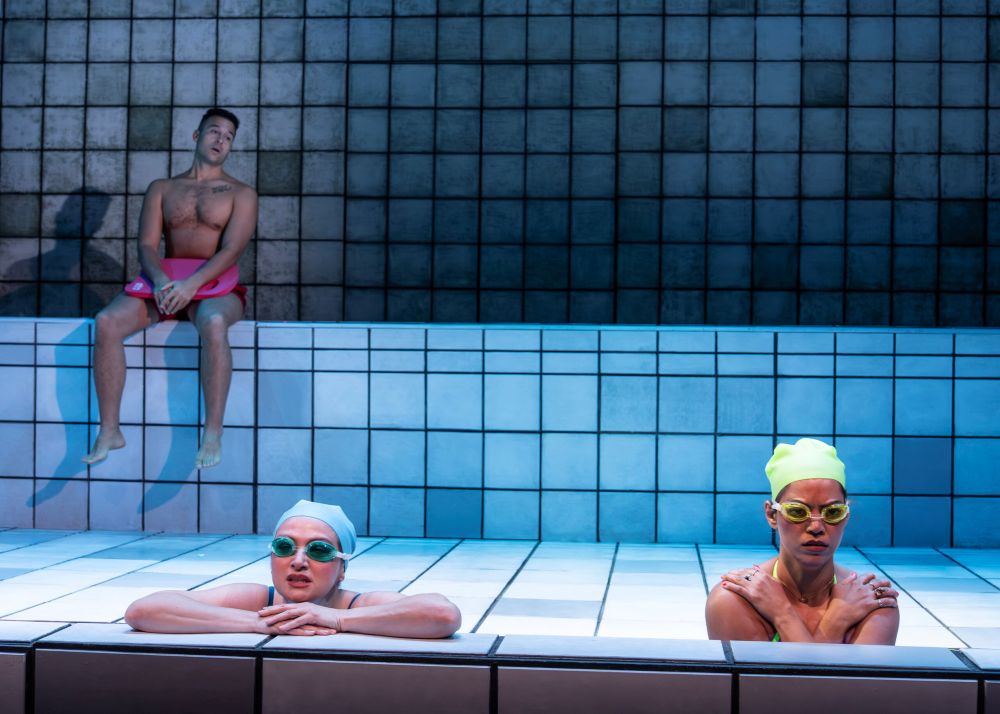
To reinforce the significance of the swimming, Jon’s observes that an ancient Greek philosopher considered water to be the primary principle of matter and the origins of all things. It’s also dominant in the tiled bi-level set (scenic design, Emmie Finckel), with a narrow horizontal recess that spans the downstage space, representing the gym and the pool in which the characters take their swimming lessons. It changes easily, with a few roll-ins and sliding panels with neon lights, to the school bathroom, the charity shop where they try on clothes (costumes by Siena Zoë Allen, hair and make-up from Caitlin Molloy), Ceyda’s kitchen, and the world of the internet, with projections of the Twitter logo on the upstage wall when Karya is messaging. Sound (by G Clausen) provides splashes and echoes of the water, the pings of Libby’s phone (props by Emmarose Campbell), and the tweets and voiceovers of the DM content, while shifts in lighting (by Reza Behjat) shine spotlights on the characters and indicate the light and dark moods of the story.
Everyone has a different sense of humor; unfortunately, the crudity of Fish is not in line with mine. But the serious themes of emotional dynamics between family and friends, the challenges of being a teen, the strain of being an immigrant during Brexit, and the ever-increasing dangers of over-sharing on the internet are thought provoking, cautionary, and indicative of both 2016 and now.
Fish
At WP Theater
2162 Broadway
Running time: 90 minutes, no intermission
Through November 1, 2026