Giulia: The Poison Queen of Palermo
From the 1630s to the 1650s, more than 600 husbands in Italy mysteriously died of what initially appeared to be natural causes. It was a time when their wives had no rights, no option for divorce under the Catholic Church, and no hope for escape from an abusive marriage, until the undetectable colorless, odorless, and flavorless arsenic-based poison Aqua Tofana was created to kill the brutal and controlling men.
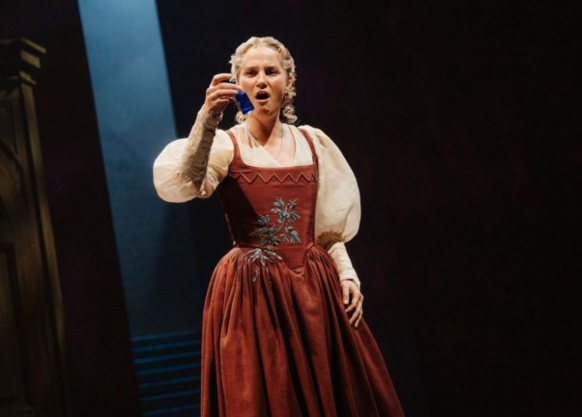
Now in its limited, world-premiere engagement at Off-Broadway’s Perelman Performing Arts Center (PAC), the new musical Giulia: The Poison Queen of Palermo was inspired by the obscure story of the real-life 17th-century Sicilian apothecary and proto-feminist anti-hero Giulia Tofana. Written by and starring country singer/songwriter Jennifer Nettles (who previously appeared on Broadway as Roxie Hart in Chicago and Jenna in Waitress), the historical theme, with largely imagined events, combines the few known facts about Giulia, her deadly underground vigilante justice, and the desperate circumstances that impelled it as a means of self-defense.
With 26 original songs, Nettles’ contemporary music spans a variety of genres, from narrative show tunes and expressive ballads to traditional Italian folk stylings and hip-hop. A live eight-piece orchestra accompanies the show (music direction and arrangements by conductor Adam Rothenberg). Cian McCarthy’s rich orchestrations evoke the Baroque era, and choreography by Austin McCormick is well-suited and mood-appropriate.
This varied music, rather than sounding like an anachronistic mismatch with the true subject, suggests the confluence of then and now and supports the universal theme of a united sisterhood fighting against an oppressive patriarchy, which, sadly, is still relevant today. The dialogue, punctuated with snippets of Italian words and phrases but delivered by the actors without the affectation of Sicilian accents, once again bridges the significance of similarities from the past to the present, from there to here.
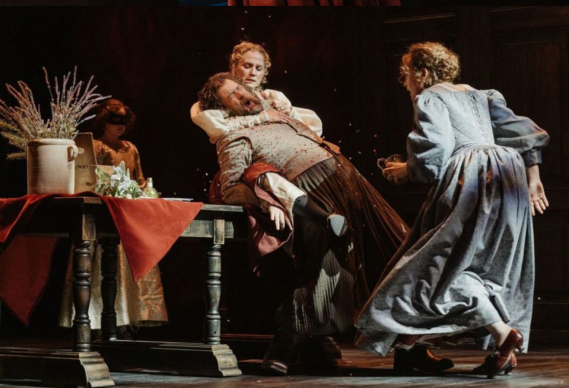
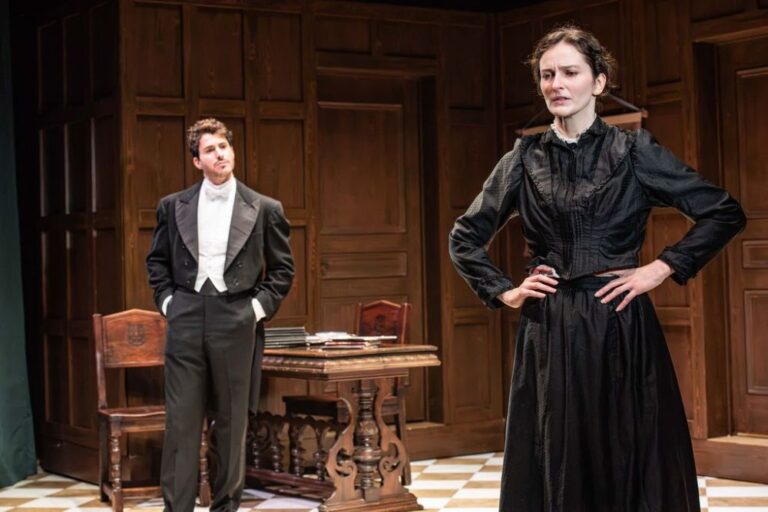
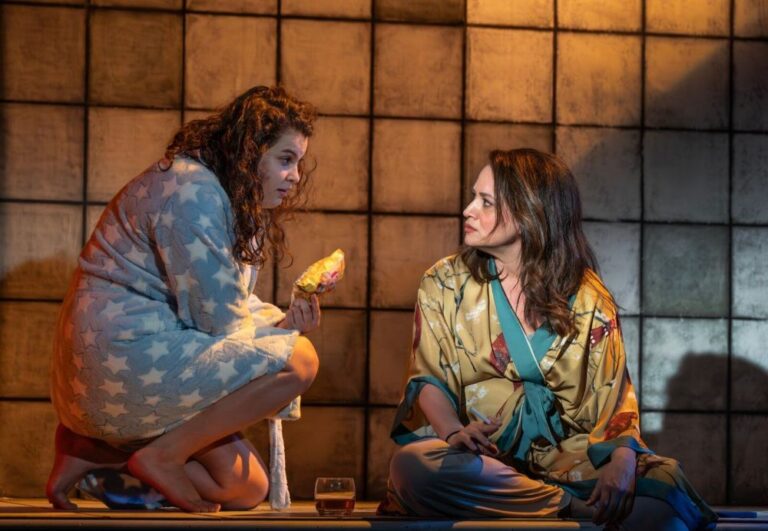
Actively directed by Mary Zimmerman, a cast of thirteen embraces the clashing male and female perspectives. One viewpoint: the drama and danger of Giulia’s secret mission to free the suffering women, their joy of coming together and supporting each other’s liberation. The other: the machinations, scrutiny, and betrayals that reveal the actual cause of the men’s deaths and its ultimate consequences. Nettles turns in a blockbuster performance and vocals, embodying Giulia’s full range of emotions, her thought process, and the justifications for her actions. First, she is triggered by her husband (viciously portrayed by Matthew Amira) attacking her innocent but quickly maturing young daughter Vitoria (Naomi Serrano). Then, we see her transition from a downtrodden wife to a proud and empowered defender of those who desperately need her help, while morally distinguishing them from those who don’t.
In the role of the Cardinale, the consummately controlled Quentin Earl Darrington expresses the misogynist religious dogma that blames women for the temptation and fall of man. He stands in contrast with the initially more empathetic Father Paolo (Sam Simahk) while harboring a secret of his own that leads him to Giulia’s apothecary shop. The Cardinale also wheels and deals with the Governatore, a villainous rogue with blind ambition, played to perfection by the outstanding Christopher M. Ramirez, who lies and manipulates and lusts after Vitoria. He, and Didi Romero as the entitled Duchessa (singing I “Always Get What I Want”), provide the show’s comic relief with their over-the-top self-centered characters — until they don’t, and their egomaniacal behavior is no longer funny but fatal.
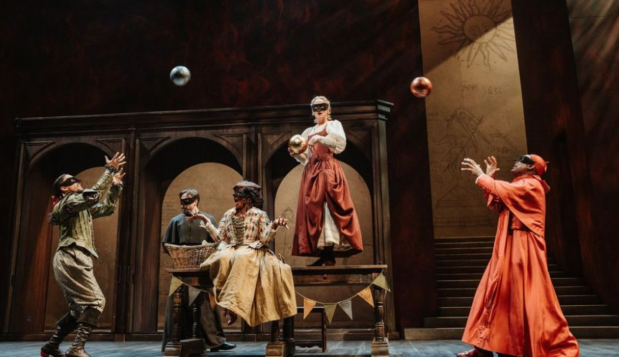
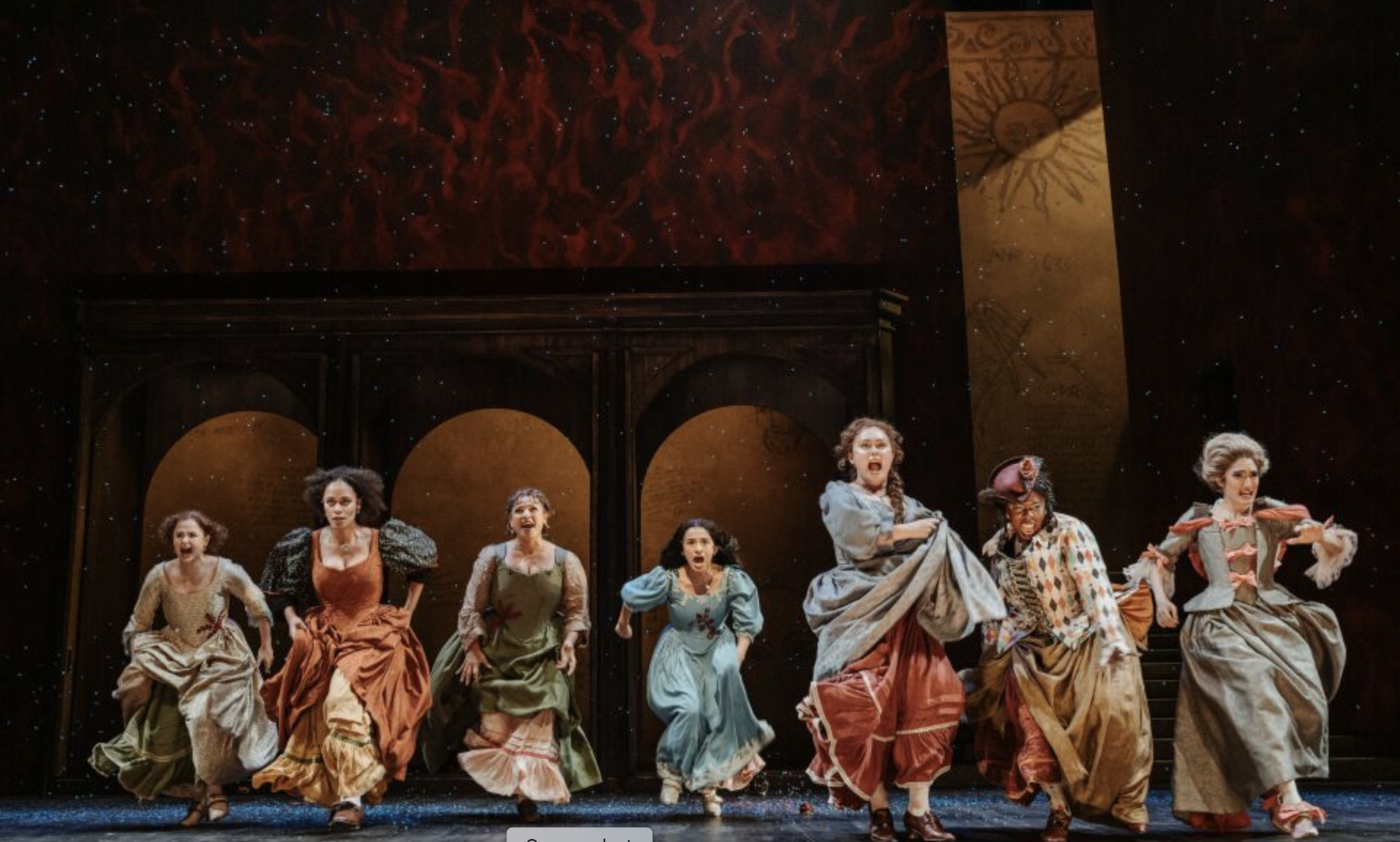
Bre Jackson as La Capitana, a mysterious narrator and seer, leads us, and Giulia, through the compelling story. La Capitana is derived in part from the 16th-century Italian theatrical form of Commedia dell’Arte, as is the troupe performing a lively early scene with colorful balls. Period-style costumes by Ana Kuzmanić that include masks, and the diamond-shaped pattern of La Capitana’s jacket, inspired by the stock character Harlequin, also echo the Commedia, as do hair and wigs by Charles G. LaPointe and make-up by Rachael Geier. Andrew Kober, Emily Fink, Aubrey Matalon, Jamila Sabares-Klemm, and Maya Sistruck round out the consistently compelling company of poisoned men and liberated women.
Daniel Ostling contributes efficient, historicizing scenic design: a grand staircase at the side and a central wooden cabinet of three double doors that open easily to the changing locales, from the apothecary shop, to the bed of the Duchessa and her husband, to the church and its monumental crucifix. Dramatic changes in lighting (by T.J. Gerckens) and sound (by Palmer Hefferan) enhance the scenes and accentuate shifting tone.
From the momentous theme to the stellar performances to the engaging direction and effective artistic design, Giulia is a revelatory experience that shouldn’t be missed and should garner many more awards for the Grammy-winning Nettles.
Giulia: The Poison Queen of Palermo
At the Perelman Performing Arts Center (PAC NYC)
251 Fulton St.
Running time: 2 hours and 30 minutes, one intermission
Through August 2, 2026