Joe Turner’s Come and Gone
Superb performances; slice of life storytelling; a bit of something extra: all this and more greet you at the Barrymore Theatre, where August Wilson’s Joe Turner’s Come and Gone is getting a handsome revival.
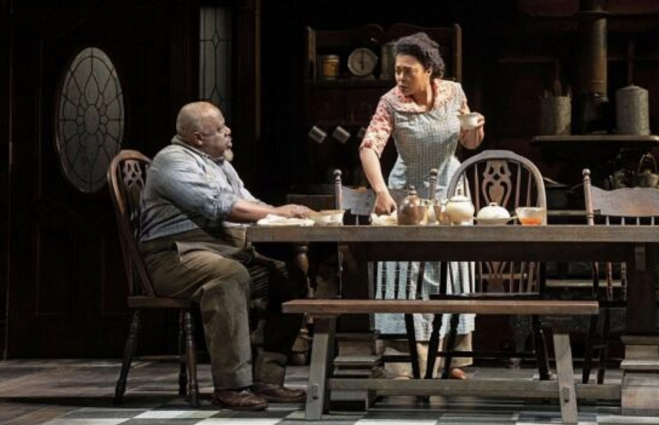
Part of the Century Cycle of 10 plays Wilson wrote about the Black experience in America, Joe Turner takes place in 1911, near the start of the 20th century. The play shows the transition-time chaos of the Great Migration; only one of the characters in Joe Turner was born in the North. The people who populate Joe Turner hold within themselves the living memory of slavery. Plantation traditions like conjure men, Juba dance, mystical visions and hauntings are alive and well. Yet the story plays out against a backdrop that shows Pittsburgh, city of steel, smokestacks spewing, train bridges spanning the neighborhood, industrialization everywhere surrounding a boardinghouse where the action takes place (superb scenic design from David Gallo).
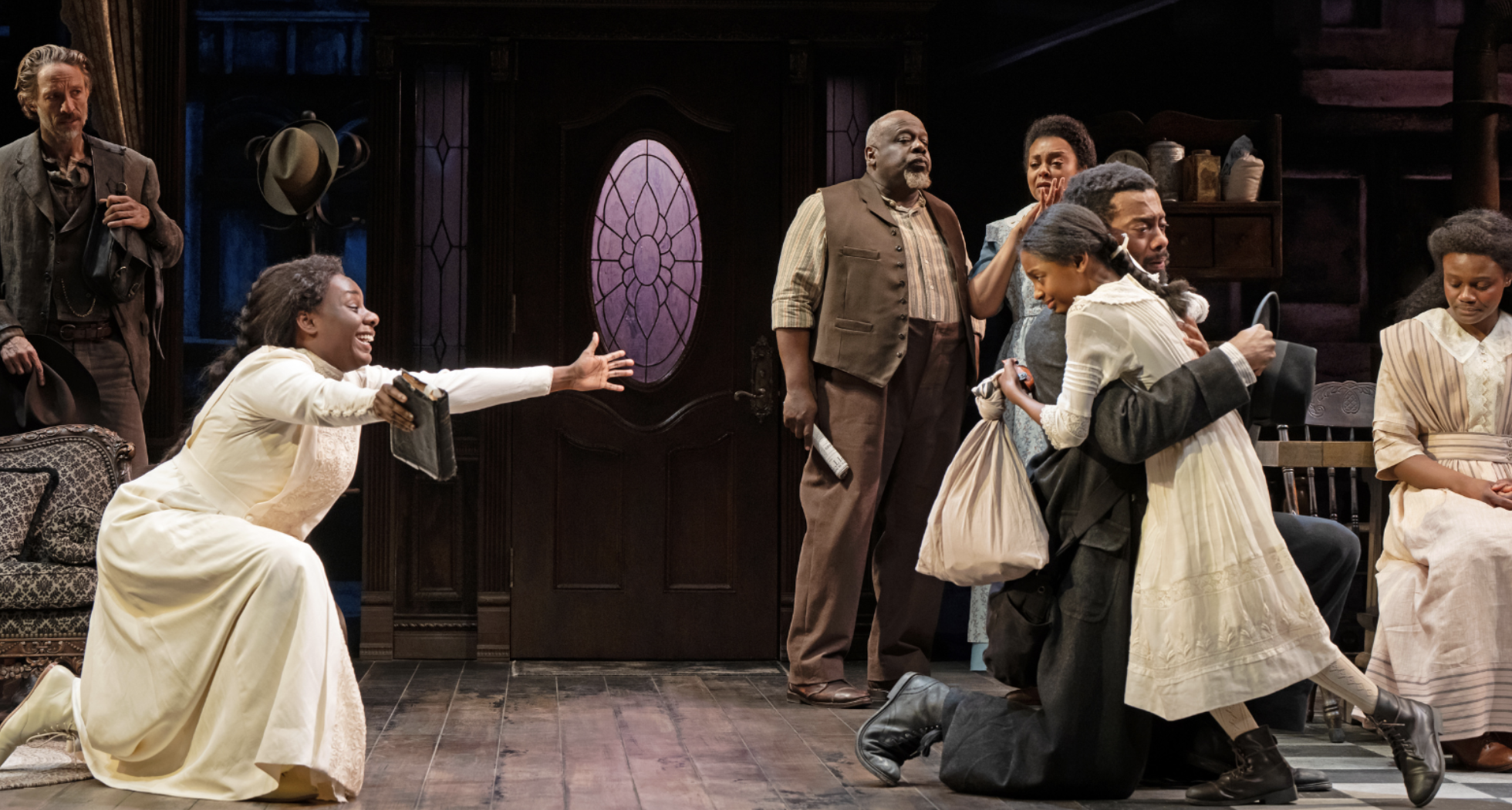
Into that boardinghouse walk Mattie (Nimene Sierra Wureh) who’s looking to get her man back; Jeremy (Tripp Taylor), a classic callow youth, with a job, a guitar, and an eye for the ladies; Herald Loomis (Joshua Boone) who is looking for his wife, and his daughter, Zonia (Savannah Commodore in the performance I saw); Molly, a young woman on the make; and eventually, Martha Loomis, the long-lost wife. The sole white man in Joe Turner, Rutherford Selilg (Bradley Stryker) is both an itinerant salesman and a “finder” who will try to locate anyone; he reveals that his family were really good slave-finders. Casually, as if it were nothing.
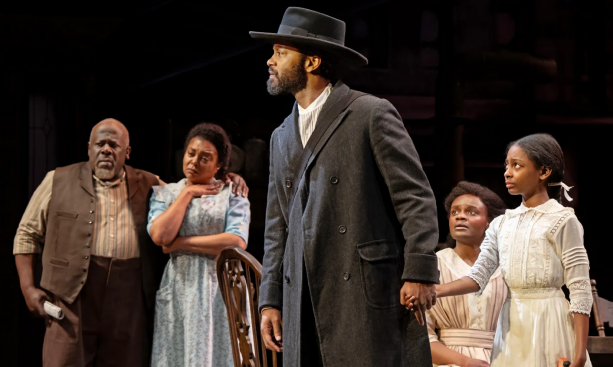
Most of these people are looking for something, much of which remains hidden: Jeremy, for a chance to make a living with his guitar; Bynum, for a Shiny Man who was the impetus behind a life-changing vision he had years ago; Mattie, for a man; Molly, for a man who’ll take care of her; Zonia and neighbor boy Reuben (Jackson Edward Davis) for the future; Herald, of course, looking for his wife. Only Seth (Cedric The Entertainer) and Bertha (Taraji P. Henson) are solid, rooted enough to anchor the seekers around them.
Directed by Debbie Allen, this is a Joe Turner for our times, when we are so comfortable with a lot of talking and interaction among characters, but not a ton of incident. Lots of talk, not as much action, and that’s just fine; the main question of Joe Turner, where is Herald’s wife? gets resolved in the end, but… What we do get is star-turn performances, and lots of them.
Among the star turns, we have Cedric The Entertainer as Seth Holly, gruff, earthy owner and manager of this boardinghouse in 1911 Pittsburgh. Equally good: the gift of Taraji P. Henson in a knockout Broadway debut as Bertha Holly, his wife, the woman who glues the house together with good food and better advice. Joshua Boone creates unease and menace just by standing still in his long dark coat and soft black hat, and saying almost nothing; when he breaks out into visions, or rage, or grief, it’s an explosion. If I have to pick a best-of, though? I have to go with Ruben Santiago-Hudson, who gives a performance as conjure man Bynum Walker that’s solid, real, and loveable, even though the whole idea of “conjure man” and the folk binding magic he practices seem impossibly weird to us now.
But “now” – 2026 — does not matter in Joe Turner. The mystical moments take us outside of time. Herald, provoked by the people in the house Juba dancing to the song, “Joe Turner’s Come and Gone,” reveals that Joe Turner himself had captured Herald and held him in hard labor for seven years. Herald breaks. He has visions and speaks in tongues; Bynum attempts to help him as the rest of the cast, in Allen’s inspired direction of a challenging scene, become background to whatever apocalyptic thing is happening.
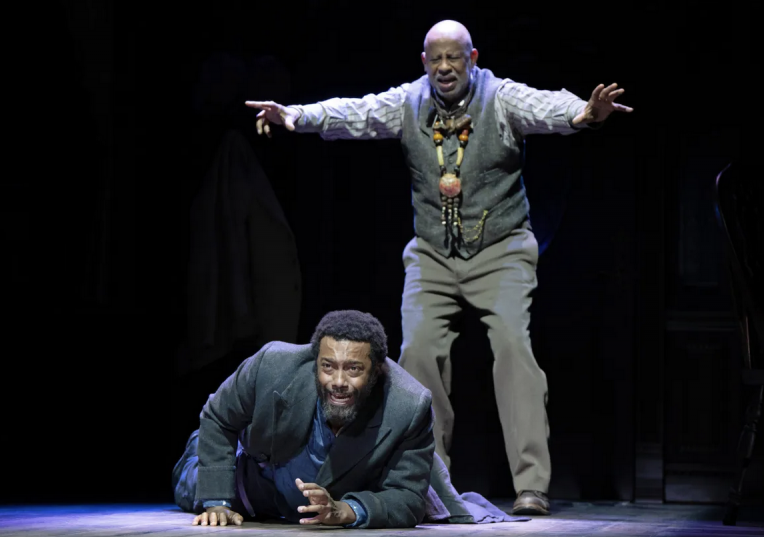
Excellent lighting design from Tracey Derosier and sound design from Justin Ellington add sturm und drang to this stormy scene at end of Act 1 in particular. Costumes come from Paul Tazewell, who has a Tony nomination for his beautiful work here, and splendid hair and wig design from Mia Neal bring the cast to vivid life. Dawn-Elin Fraser contributes hugely, as dialect coach, and music supervisor Steve Bargonetti sets a scene with evocative sound.
Well worth seeing, as are all of August Wilson’s plays, this revival of Joe Turner’s Come and Gone shines a light of mystery and redemption on the Black experience in America.
Joe Turner’s Come and Gone
At the Barrymore Theatre
243 W 47th St.
Running time: 2 hours 30 minutes, one intermission
Open run