Other Desert Cities
It’s been just over 15 years since playwright Jon Robin Baitz’s breakthrough play Other Desert Cities opened in Manhattan, initially Off-Broadway, then transferred to Broadway. Now at the Hudson Theatre, in a revival packed with starpower, the decent, respectable Other Desert Cities is a prime example of the recent Broadway trend: casting high-visibility film or television stars in leading roles. Julia Louis Dreyfus, Ed Harris, Allison Janney, and Lily Rabe are all cast here; all are primarily known for their film or television work.
It’s worth mentioning that Stockard Channing originated the role of the imperious mother; the late Stacy Keach played her husband, and the cast included Judith Light as the quip-spouting recovering-alcoholic sister. I say this because as recently as 15 years ago, plays and musicals had stage actors with years of theatrical experience under their belts. Many of the current crop of thespians are culled from movies and television. This trend fills the seats, with skyrocketing prices to match. Case in point: this revival is selling out, with tickets running from $800 to over $1,000 a seat. Does casting famous film/TV actors make better theater?

In the case of Other Desert Cities, maybe, maybe not. In the role of Polly, Louis-Dreyfus seems to be the driving force for the rabid mass appeal of this show. This is her first foray on Broadway, and she is still finding her way into the role; she inhabits the early portion of the play in her comfort zone of sitcom-style zingers. Playwright Jon Robin Baitz generously parcels these out to the various characters; Allison Janney, as her sister Silda, in particular gets equal verbal badinage.
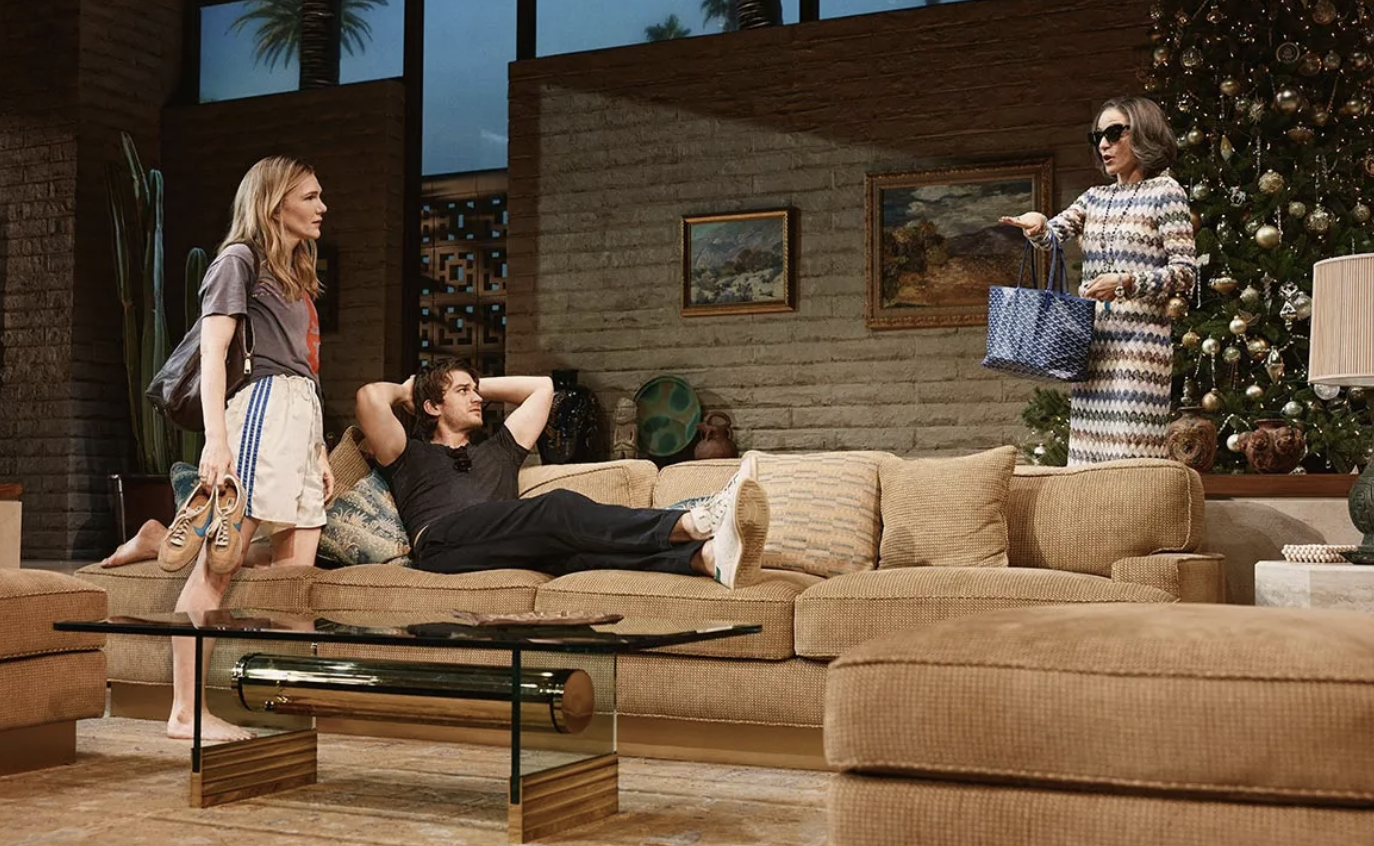
The play is set in Palm Springs on Christmas Eve 2004. The family is gathering for a holiday; that includes Polly’s adult daughter Brooke (Lily Rabe) and her brother Trip (Joe Keery). Polly’s stoic husband Lyman (Ed Harris) tries to keep the family in check, especially Silda (Allison Janney), Polly’s flaky, drying-out sister.
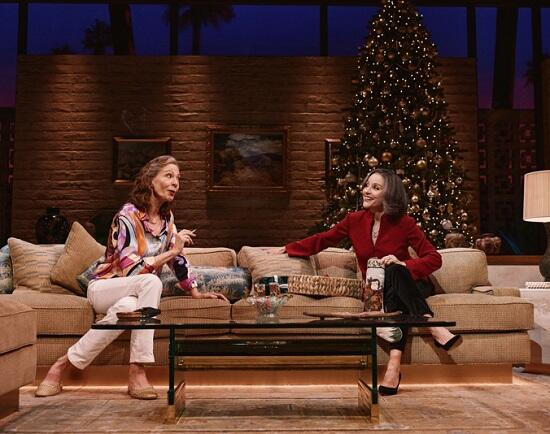
In the first scene everyone has just returned from a tennis match (excellent costumes from Tom Broecker). Brooke, just in from New York, has written a tell-all memoir about her family, soon to be serialized in The New Yorker. But before she sends out the manuscript to her publisher, she wants her family’s blessing and approval. Good luck on that one. Her brother Henry is prominently featured in her tome; often on drugs, he had joined a cult, was implicated in a bombing that killed a few bystanders, and committed suicide. This information is carefully parsed out during the first act.
Polly and Lyman were once well-known in Hollywood. She was a big shot screenwriter; he a retired movie star who was known for his Westerns. They are staunch Reagan-supporting Republicans and retired to the Palm Springs version of a low-key lifestyle. Their sordid past needs to be buried, unspoken. The thought of those long-ago traumas are the last thing this couple wants to be splayed out in a book for the masses to discover. Brooke, on the other hand, needs to cleanse herself of these demons. She willing to bring about family Armageddon because she’s spent years grieving the brother she loves and believes this book will heal her.
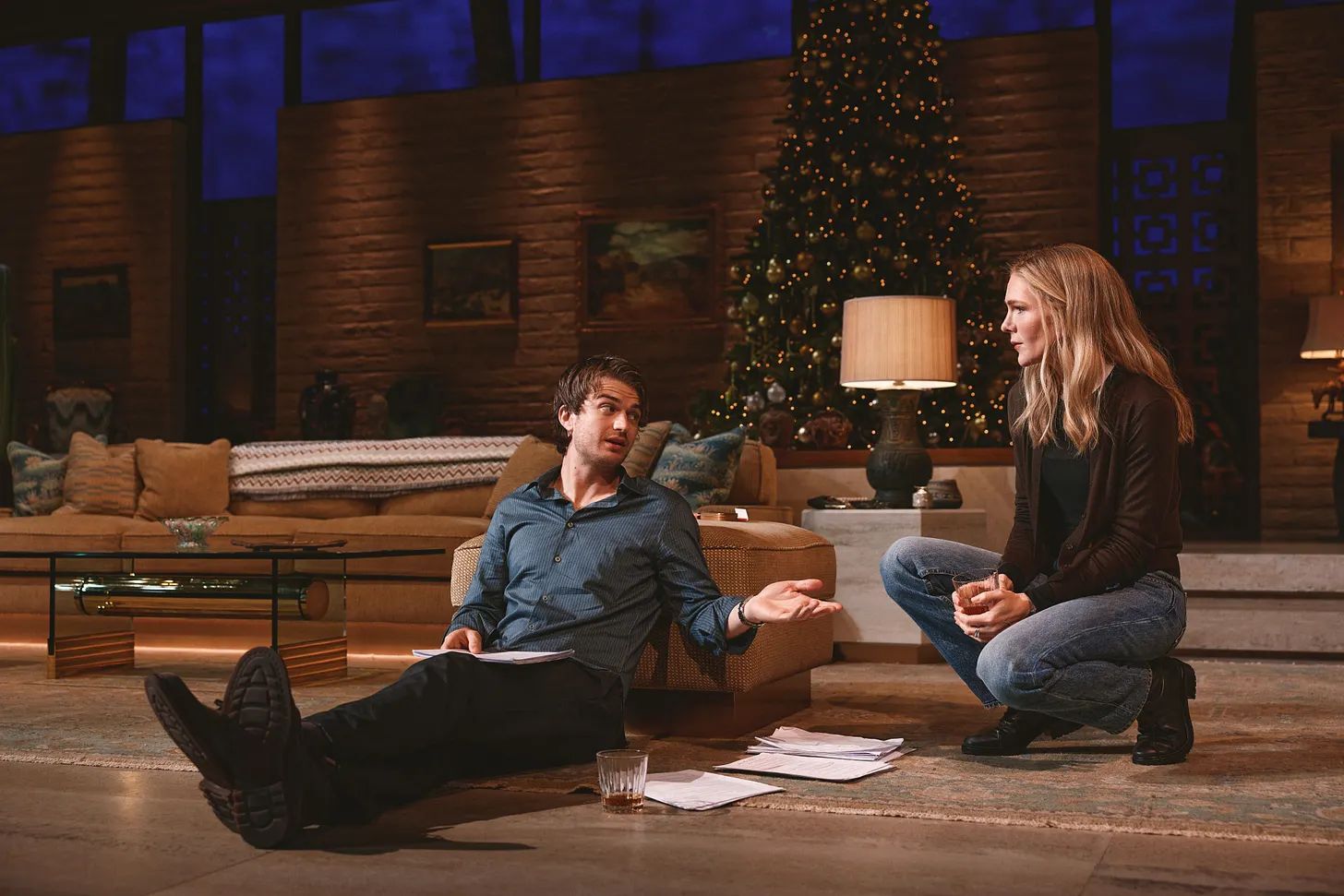
The first act is light on its feet with various one-liners thrown back and forth. This in turn sets the stage for the inevitable second-act twist, one that savvy viewers might pick up with careful eyes and ears. When the dénouement finally arrives, it hits with a whimper rather than an explosion. The truth is revealed, leaving everyone trying to construct an alternate truth and maintain their composure.
Scott Pask’s gobsmacking living room set with its sunken fireplace, imposing couch and enormous Christmas tree (the family is Jewish, btw) are prominently featured; lighting design from Natasha Katz adds to the atmosphere. Director John Benjamin Hickey often has his actors placed far apart, which shows the family’s psychological isolation from each other. In the penultimate scene, he oddly has various members of the family shrouded in semi-darkness or actually facing away from the audience. That’s not just isolation, that’s leaving the room without leaving the room.
The last scene ties everything together with hope of closure, as it constructs a new, maybe false, reality. Other Desert Cities is a star-studded Rorschach-style puzzle that twists and turns in the wind and leaves the viewer to discern what is real.
Other Desert Cities
At The Hudson Theatre
141 West 44th St.
Running time: 2 hours, 15 minutes
Through January 17, 2027