The Fear of 13
The woman behind me kept murmuring, “Oh, my God, oh, my God.” She was responding to the parade of indignities and setbacks being visited upon our protagonist in The Fear of 13, Lindsey Ferrentino’s docudrama at the James Earl Jones. She was also perhaps more involved than she’d otherwise have been because that protagonist was being portrayed by Adrien Brody, one of several movie stars visiting the Broadway stage this season, and probably the reason most of the audience was there. Brody takes to the stage well, though possibly not as well as he could, and at least some of The Fear of 13 is riveting, though possibly it could be better.
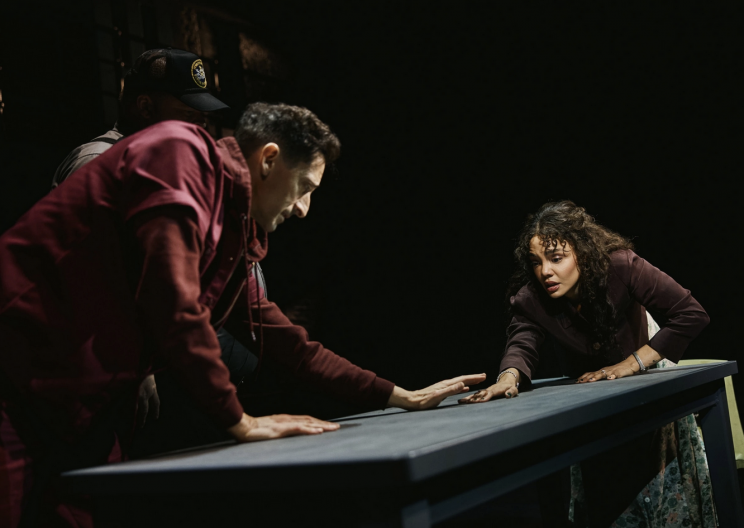
It’s a searing indictment, to be sure, of the vagaries and out-and-out unforgivable flaws of the American legal system, adapted from David Sington’s 2015 documentary. Sington chronicled the plight of Nick Yarris (Brody here), a convicted murderer who was guilty of plenty else, but not of killing Linda Mae Craig. The film consists largely of Yarris facing the camera and telling his story; Ferrentino fleshes this out, though there’s still a lot of Brody facing front and telling.
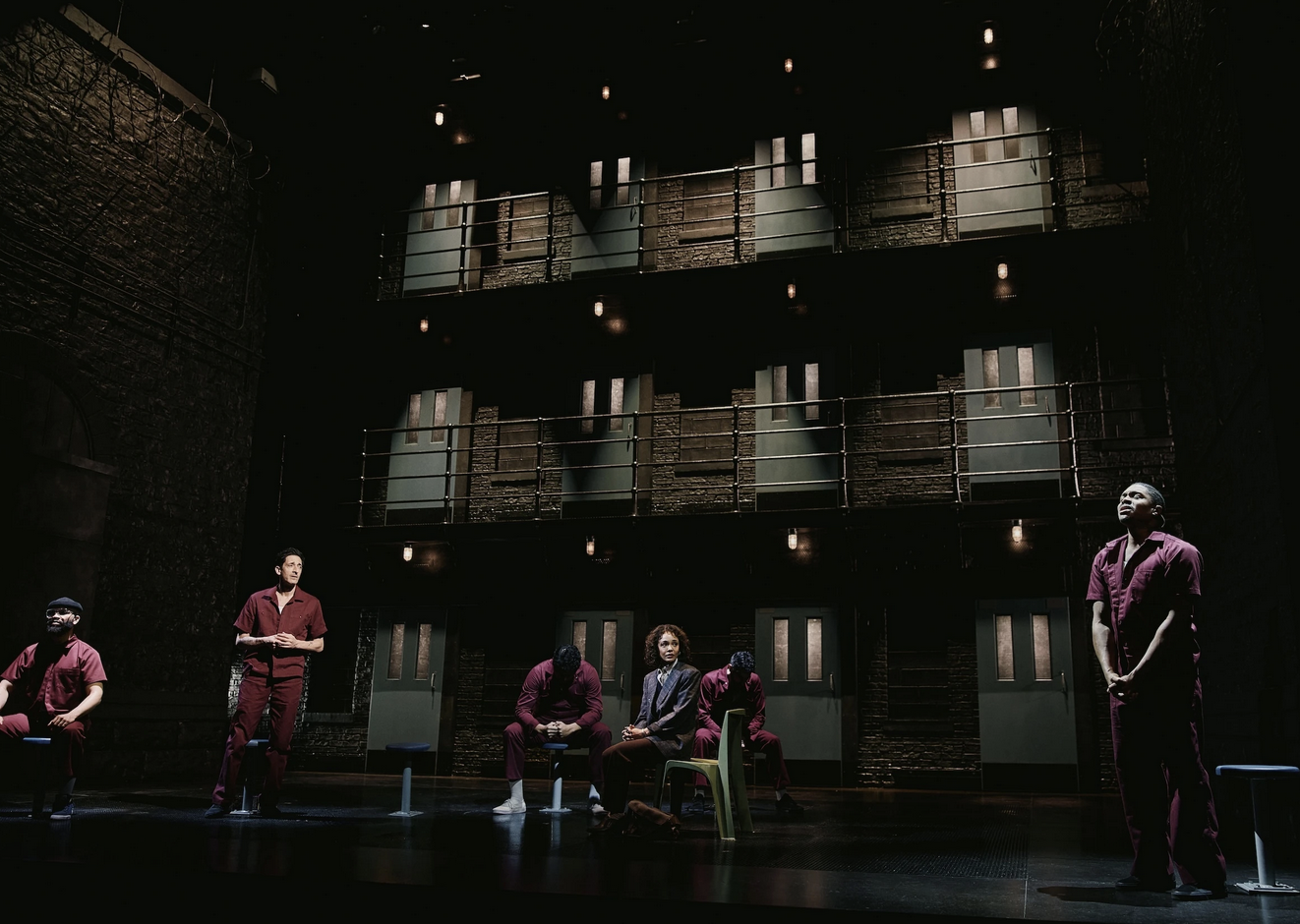
You’ll love the beginning, with a scowling, hard-as-nails prison guard (Joel Marsh Garland) barking out orders to the audience about cell phones and videos, one of the wittiest turn-off-your-devices gambits you’ll ever see. We’re in a rural Pennsylvania slammer, on Death Row—Arnulfo Maldonado’s set, mostly a three-story prison-cell backdrop with a couple of roll-in insets, is simple and effective—where Jacki (Tessa Thompson), a well-meaning volunteer, shows up regularly to talk with the inmates and advocate for their rights in any way possible. Fairness isn’t a concept here, not with the guards regularly beating up the convicts, demanding their silence, and taking away their already severely limited privileges.
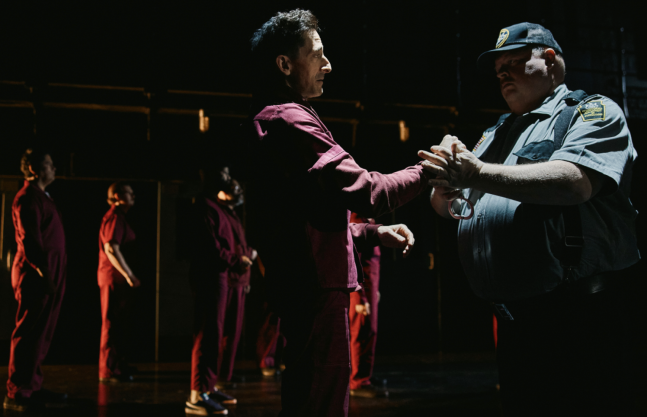
A quick montage reveals the convicts to be understandably hopeless and surly, but Jacki and Nick, after a blustery beginning, warm up to each other, to a degree I didn’t entirely buy. Nick is literate, well-read, smart, and can be Adrien Brody-charming when it suits his purposes. His appellate attorney (Victor Cruz) is a religious jerk who supports the death penalty, and Nick’s chances of beating this rap appear to be nil. But it’s the 1980s, and DNA testing is in its infancy. Maybe, with Jacki’s help, he can prove he was never near Linda Mae?
That occupies much of the remaining action, with several side trips. The growing affection between Nick and Jacki, while it really happened, just doesn’t sufficiently register. “I’m a good guy, OK?” he tells her. “I just do stupid, stupid things.” That’s an understatement: Nick did too many youthful drugs, stole too many cars, escaped from two sheriffs while on his way to an appeals trial and spent a month on the lam, and was such a rotten kid that his parents kicked the teenage Nick out of the house. Why would Jacki fall in love with that? Thompson plays her earnestly, just on low voltage, and what’s meant to be a heartrending love story plays more like a procedural.
That might be partly Brody’s doing, too. He gets Nick’s odd Everyguy likability: a swagger, an urban delivery worthy of a Pacino or De Niro, a way with a sharp line—“I’m so glad I was a drug addict, cause I got addicted to books.” But that delivery can also tend toward the singsong; it feels like he’s saving his energy for the big moments, of which there are many, and which he’s quite good at.
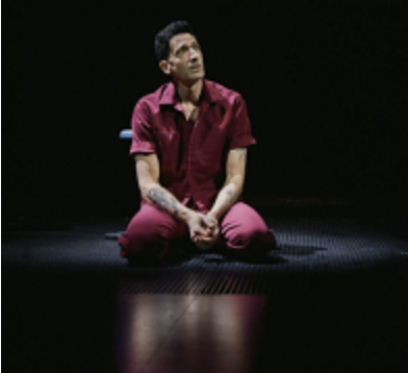
As the DNA efforts bump up against one setback after another, Nick breaks down, and Brody’s terrific at that. But director David Cromer, who has a deserved reputation for being good with actors, might have calibrated this performance a little more smoothly. The most touching moment, in fact, has nothing to do with Nick; it’s a musical farewell among two cellmates, Wesley (Ephraim Sykes) and Butch (Michael Cavinder), who love one another and are being separated. That’s the love story that reverberates.
Ferrentino’s script is a mélange of flashback, narration, and montage—another one, of Jacki’s and Nick’s evolving romance after she gives him her phone number, feels dramatically rushed. So does Nick’s murder conviction; there has to have been more evidence than this, one feels. But the bad luck dogging him as he seeks to prove his innocence, from a judge and jury eager to leave the courtroom and celebrate the Fourth of July, to lost evidence and inexcusable delays, is forceful, and triggered a lot of “oh, my God”s behind me. A reunion of the freed Nick and Jacki is confusing; apparently it’s happening in Nick’s head, but Ferrentino and Cromer didn’t sufficiently clue us in on that.
Finally, what is the Fear of 13, and why does Nick have it? We find out near the end, in a horrifying childhood flashback that buys him a lot of sympathy. But does it justify his subsequent behavior, all the drugs and lies and stolen cars? Ferrentino seems to imply that it does, and that’s debatable. Then there’s the coda: No spoilers here, but it’s intended as a warm-fuzzy denouement, a way of sending the audience out smiling, with a lot of “Aww”s, as happy as an ending can be in a narrative this downbeat. It comes on the heels of a fine Nick monologue about the wonderfulness of life out of prison, which Brody delivers with relish. But then this false moment, and curtain.
The Fear of 13
At the James Earl Jones Theatre
138 W. 48th St.
Running time: 1 hour 50 minutes, no intermission
Through July 12, 2026