We’ll See
Sixteen years ago, the Apple family, an average middle-class American family in Rhinebeck, NY, gathered around their dinner table on a Public Theatre stage to talk about the 2010 mid-term elections.
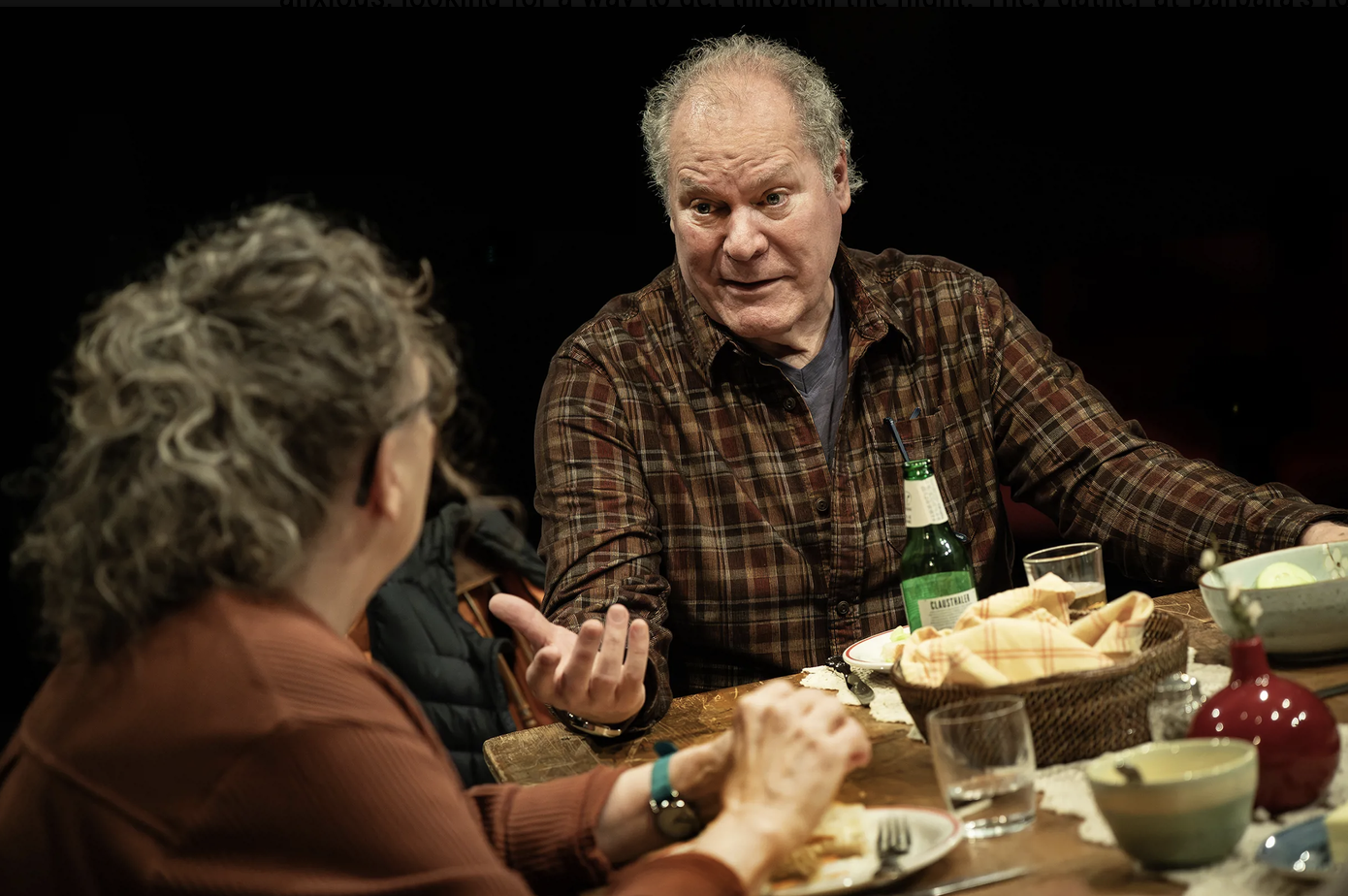
Since then, we’ve joined that family seven more times around that table (with essentially the same cast), in a larger series of plays by Richard Nelson called The Rhinebeck Panorama. The occasion is always a momentous one, either an election or a significant historical anniversary, like the 10th anniversary of the September 11 attacks, or the 50th anniversary of the JFK assassination. Three of these dinners occurred during the pandemic, when we dined with the Apples on Zoom. It’s a deeply meaningful way to journey through our challenging times together, with a family that we in the audience can join and make our own.
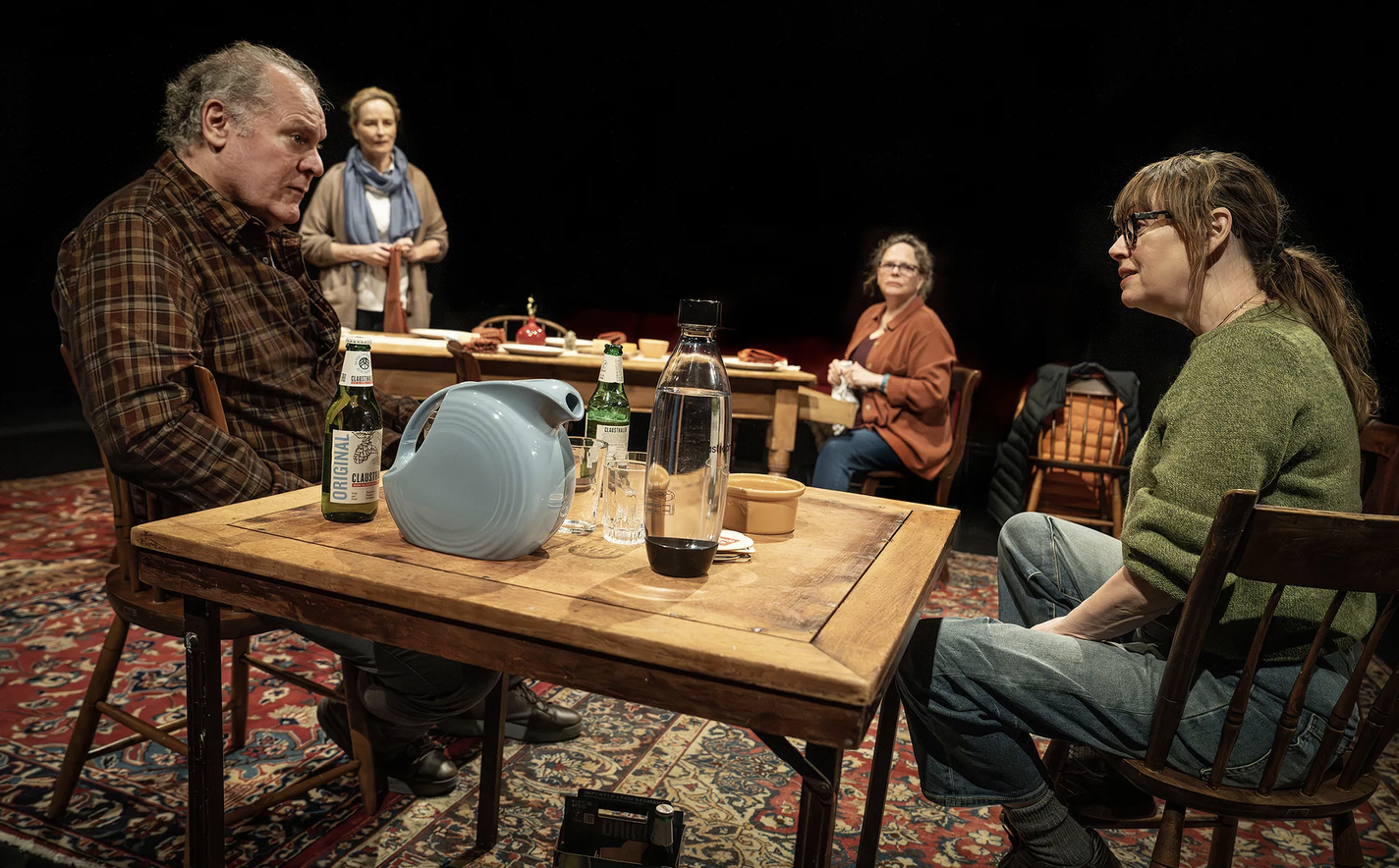
And now they gather for the first time “live” since 2013 in a play called We’ll See, directed by the playwright. Set on November 3, the evening of the midterm elections, we join the Apples again at the Public to talk about, or not talk about, what is transpiring that night. Seated around the table are the Apple sisters, Barbara (Maryann Plunkett) Marian (Laila Robins), Jane (Sally Murphy), and their brother Richard (Jay O. Sanders).
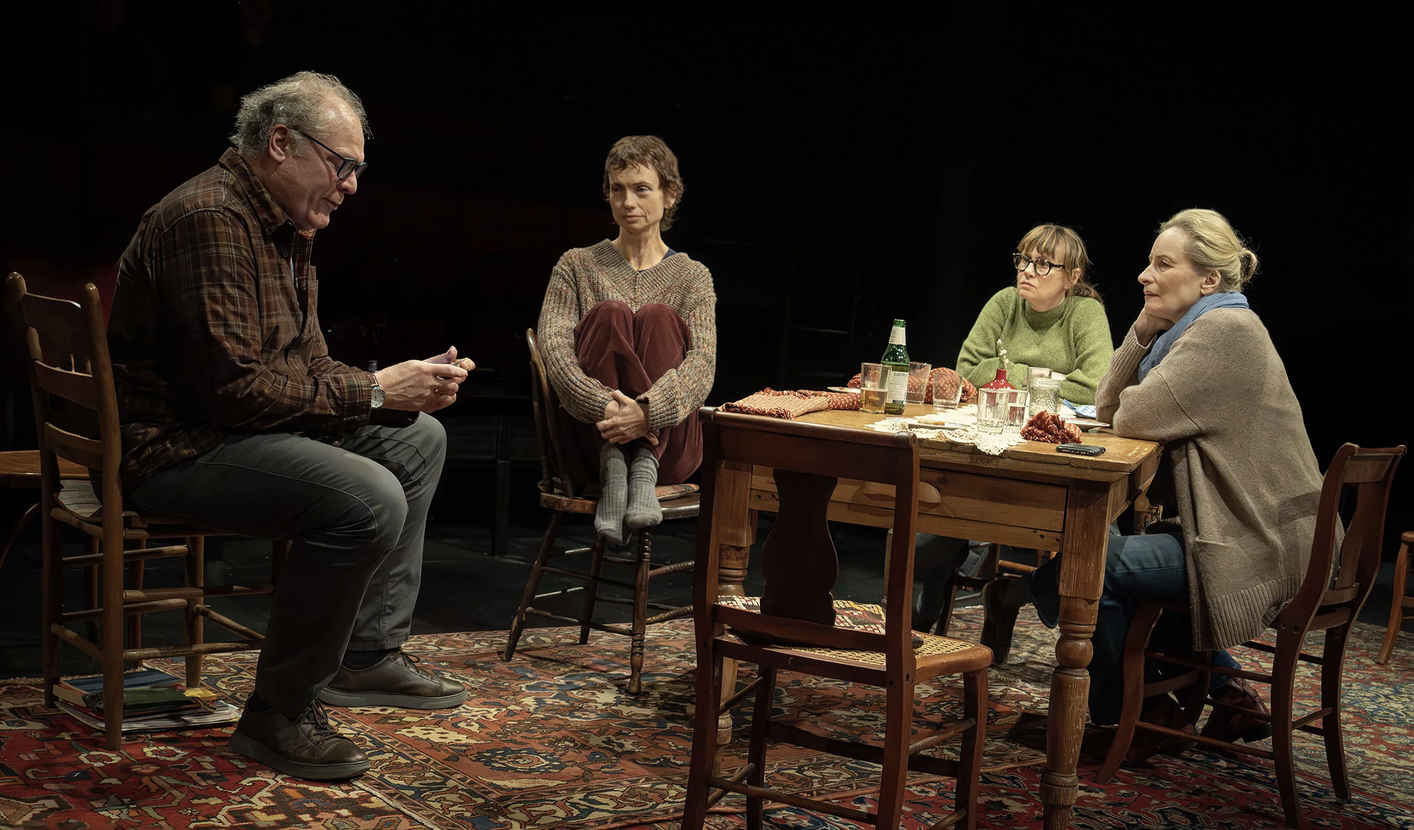
As in the former plays, the lives of each family member are in flux. Barbara (age 74), the eldest, a respected schoolteacher with decades of service, has just been fired by her principal (a former student) because of an unfair complaint. Marian has had to sell her home and move in with her sister Barbara. Jane is temporarily “homeless”, having sublet her apartment. Richard travels in Europe, and when he’s in America, cares for his ailing partner Yvonne (Yvonne Woods).
“We will not mention his name” is the pact they’ve made at the start of dinner (the “his” reference is obvious). Instead, they tell stories, sing songs, and recite poetry. Barbara talks abouts losing her job. Richard tells an amusing anecdote about a chance encounter in Paris with Andrew Cuomo, for whom he had worked. They talk about their love for Rhinebeck and how proud they are of its history and landmarks, including a tunnel that was part of the Underground Railroad.
But occasionally, their anxiety surfaces over America’s current traumatic times. “We don’t’ know yet the full extent of the damage he’s causing,” says one. “The bad men will be punished in the end and it will be forever,” says another. “So much feels so inhuman right now.” “How can a great country become laughingstock?” “Sometimes I feel I left my country and landed someplace else;” and so on. Richard says how ashamed and apologetic he felt about being American while in Europe. They talk about the collapse of hope. Then they return to random storytelling.
At times, the stories they tell are hard to connect with the meaning of the evening. But, as one character says: “We’re all just trying to get through the day…to make sense of what is happening. In the play’s final moments, we’re back in the present: “The polls are closed … Check the news… It might be good,” say various characters.
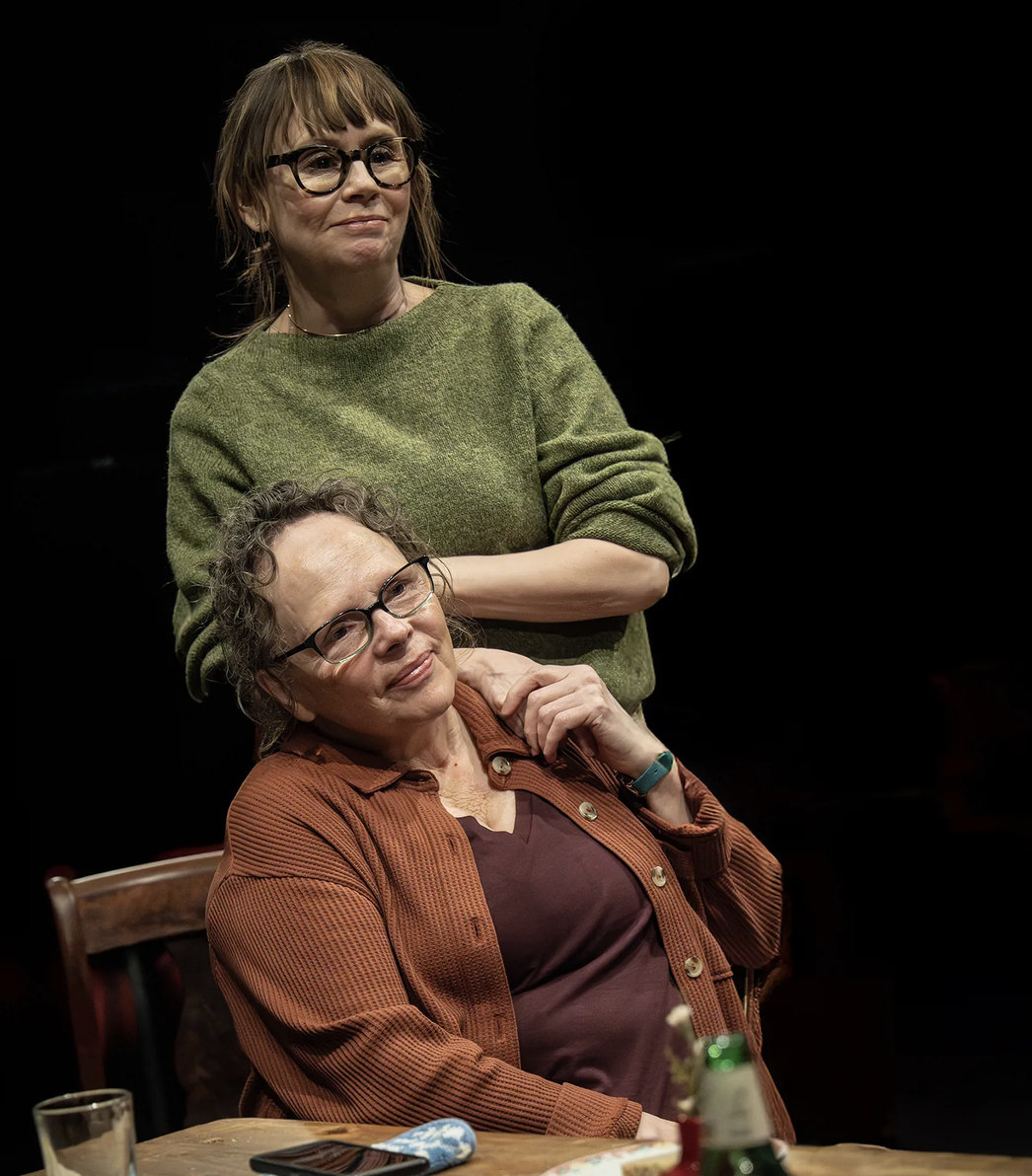
So many aspects of this beautiful, thoughtful production remind me of other moments in theatre. The Apple family’s three-sister-one-brother family structure, for example, is clearly inspired by the Prozorov family in The Three Sisters, set at another point of history in flux. (Chekhov is Nelson’s favorite playwright).
In Jason Ardizzone-West’s in-the-round design, we surround the family’s dinner table on all sides, as if we are family members, too. The result is an intimacy rarely experienced in today’s theatre, shared with a wonderful ensemble who effortlessly embody the souls of these characters as if they were written for them (they were).
There’s a noteworthy song that the sisters sing, at the beginning and end of the play. It’s introduced casually (“I heard it in a bar,” says Barbara), but the meaning is far from insignificant. It’s called “The Emigrant’s Lament”:
And when you return to the land of your birth,
There’ll be no one to welcome you home.
That notion of home will haunt you long after you leave the theatre.
I attended the opening of We’ll See on November 3, the night of the midterm election. As I write this review the next day, knowing the results, I imagine how different an experience it would have been, had the family actually turned on the news at the end of dinner and we all heard it together. But Richard Nelson has other intentions. He and his remarkable ensemble leave us with a lasting thought, one we share no matter what the results were: “In tough times, the theatre is the healthiest place to be.” The cast calls it: “Doctor Theatre.”
We’ll See
At the Public Theatre
426 Lafayette St.
Running time: 1 hour, 50 minutes, no intermission
Through November 29, 2026