Good Time Charlie
Ryan Haddad, known for writing solo memoirs as plays, has expanded his theatrical landscape to include his own family. In this case, he offers a tribute to his gay uncle in Good Time Charlie, now off-Broadway at the Public Theater.
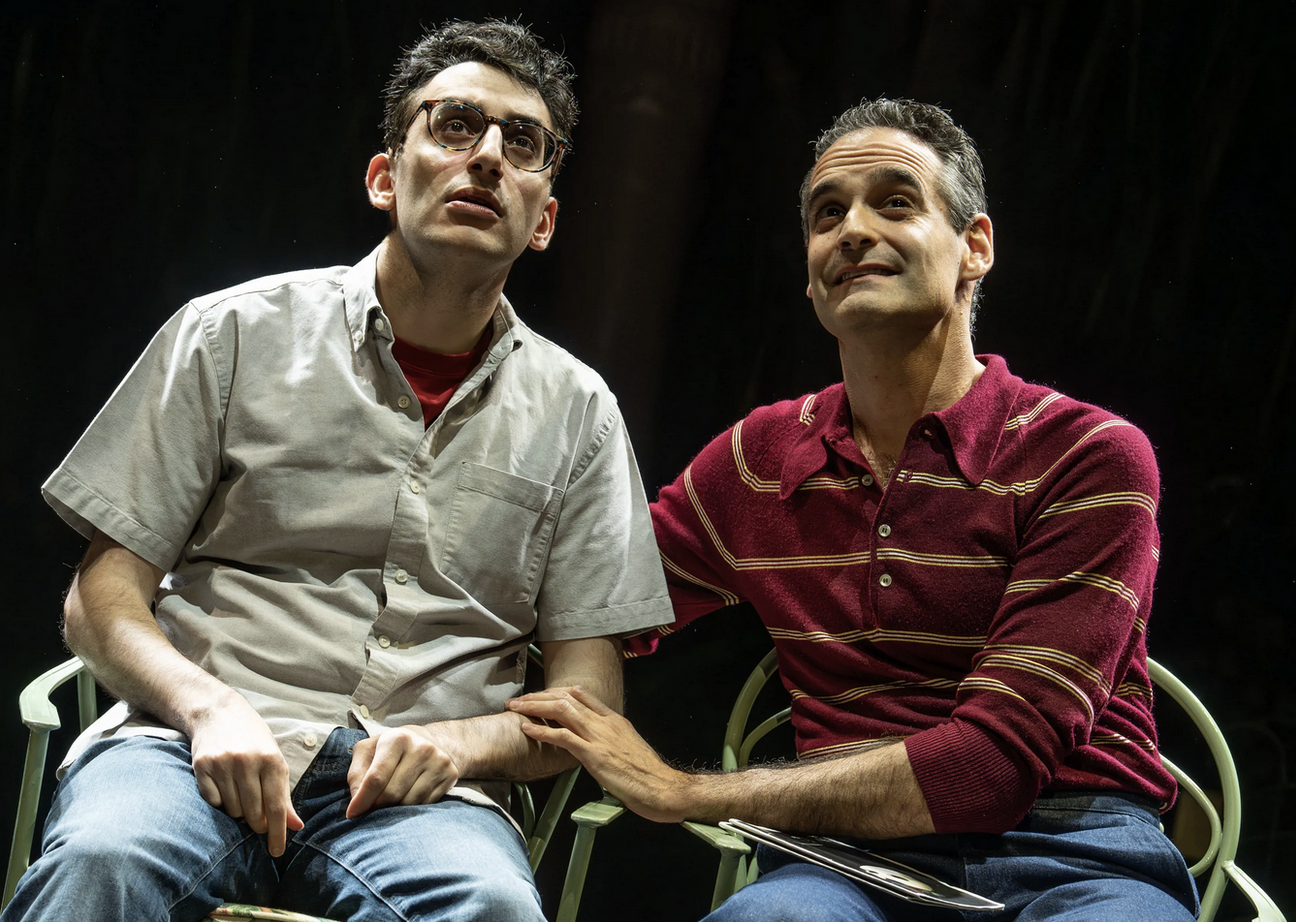
This is a loving portrait of Charlie, a man forced by time, parents and circumstance to become a Cleveland dentist, rather than pursue his real passion: theater and film. It’s also a look at Ryan’s coming out. Since the action spans 1976 to the present, we see two different reactions. Nael Nacer and Artemis Pebdani, who seamlessly play both sets of parents, are more upset by Charlie’s announcement, while trying to accept Ryan’s decisions, however challenging.
Time moves back and forth: Ryan as a child; Charlie as a young dental student attracted to Lou (Tim Bagley), 21 years his senior, and Lou’s even older friend Sheldon (Michael Cristofer), a Judy Garland devotee who runs a classic film house. Throw in Ryan’s lesbian aunt Janice (Beth Malone) and the familial portrait is complete.
Ryan enjoys the close support of Charlie, Lou and Sheldon, as mentors in his journey to selfhood. Janice, at best, is sidelined. “We already have plenty of gay male stories in the American theater. Where are the women?” she asks. Not in this play.
The real focus of Haddad’s bio-work is himself. Here, he is oddly unaware of others’ emotional states. Conversely, Charlie, sensitively rendered by Raviv, is a man who creates a chosen family after his parents initially reject him. The play is also a nonstop homage to theatrical references, from Mame to Grey Gardens to Sondheim, as well as a salute to film goddesses, Garbo to Bette Davis.
Which is to say, at two hours, Good Time Charlie is both overindulgent and predictable. There is ample exposition, but little plot and even less drama. In fairness to the actors, the play’s characters are tender and funny, but often, save for key moments, one-dimensional.
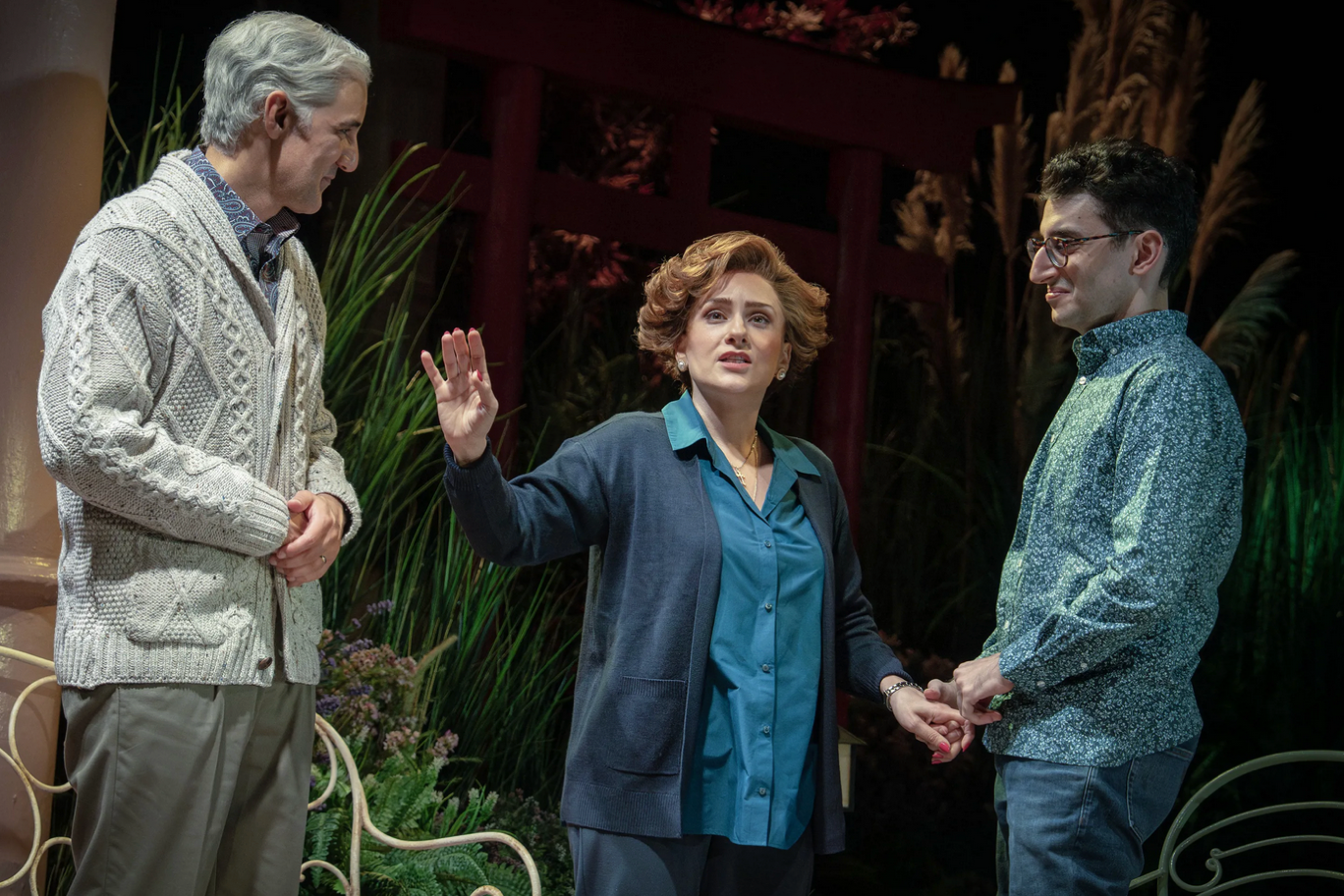
Family issues and conflicts are interesting precisely because they are universal. But here, there isn’t much grit, especially given the inevitable resolutions/endings. There are lovely scenes of genuine care, thanks to director Danny Sharron, aided by a strong ensemble; a lush Japanese garden set, produced by scenic designer Afsoon Pajoufar; Barbara Samuels’ expressive lighting, and spot-on costumes by Enver Chakartash.
But to call this show “a kind of mirror image” of Eugene O’Neill’s masterpiece, A Long Day’s Journey Into Night, as the Public’s artistic director Oskar Eustis does, is ridiculous. Haddad’s characters survive and thrive; the Tyrones of Journey do not! Nor are the profound themes, financial obsessions and specific suffering endured in Journey ever experienced here.
Instead, Haddad’s Good Time Charlie continues his longtime focus: self-examination. The pacing occasionally drags because it is not gearing up for a big finish. Rather, the show is a pleasant, even touching interlude in a suburban boy’s ongoing revelations of his life and times.
Good Time Charlie
At the Public Theater/Martinson Hall
425 Lafayette St.
Running time: 2 hours and 15 minutes, one intermission
Through Oct. 25, 2026