Here There Are Blueberries
Some productions are so provocative, the subject so important, they should be required viewing. Here There Are Blueberries, now on Broadway at the Barrymore Theater, falls into that elite category.
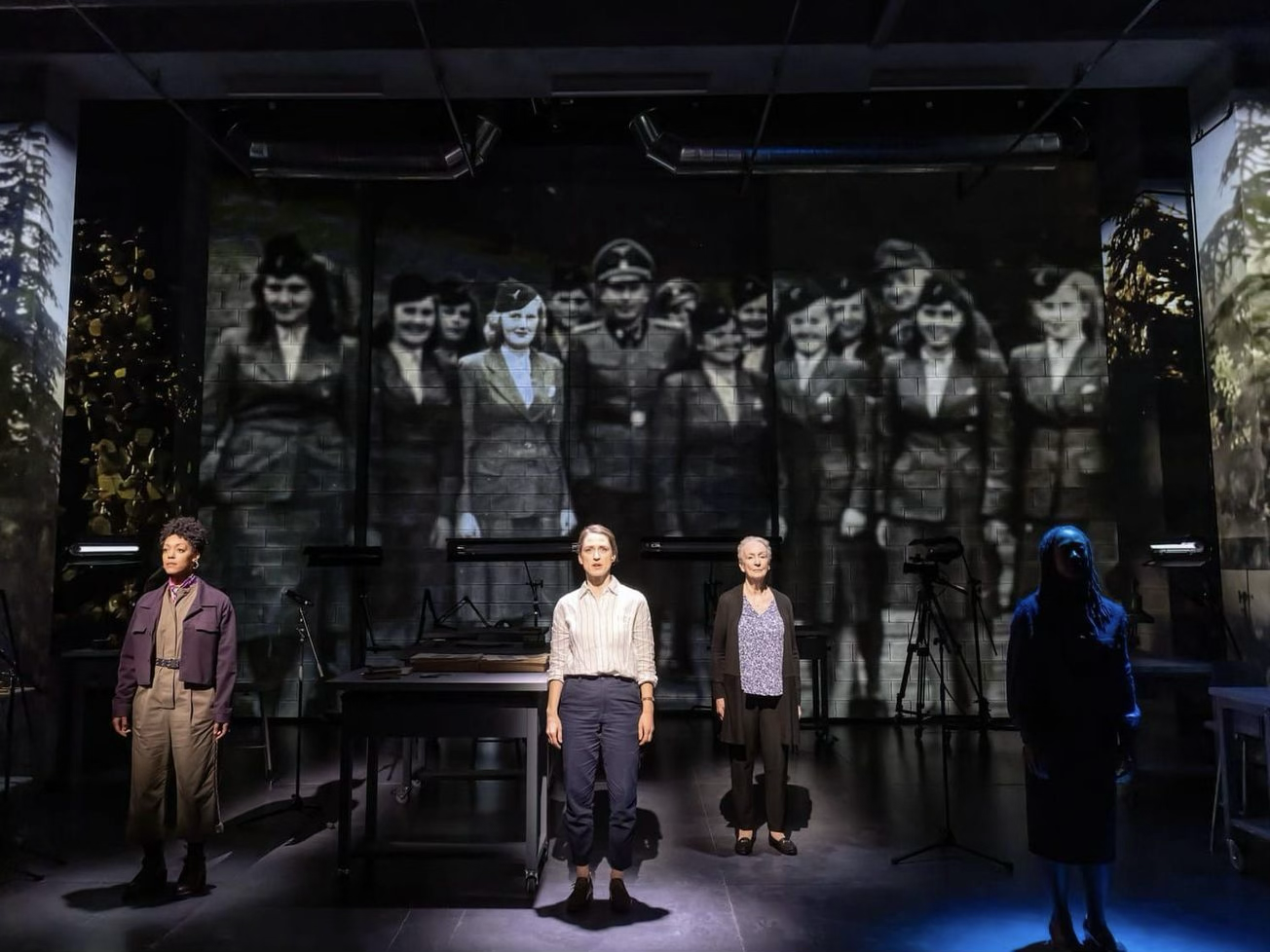
A riveting true story, written by Moisés Kaufman and Amanda Gronich, it begins in 2007, when a photo album, discovered in Germany 61 years earlier by a U.S. soldier, arrives at the U.S. Holocaust Memorial Museum. Judy Cohen (Kathleen Chalfant), the chief acquisitions curator, meticulously pores over the album, along with Rebecca Erbelding (Delia Cunningham), to identify the perpetrators, places and activities. What they discover is shocking.
Its contents, a haunting record of Nazi life at Auschwitz, the largest death camp in history, prove both shattering — and historically essential — to curators. And it personified Hannah Arendt’s banality of evil. The album contained rare photos of high Nazi command, such as Karl Höcker, as well as Rudolf Höss, Richard Baer, Oswald Pohl, and the infamous Dr. Josef Mengele, who performed lethal experiments on Jewish prisoners.
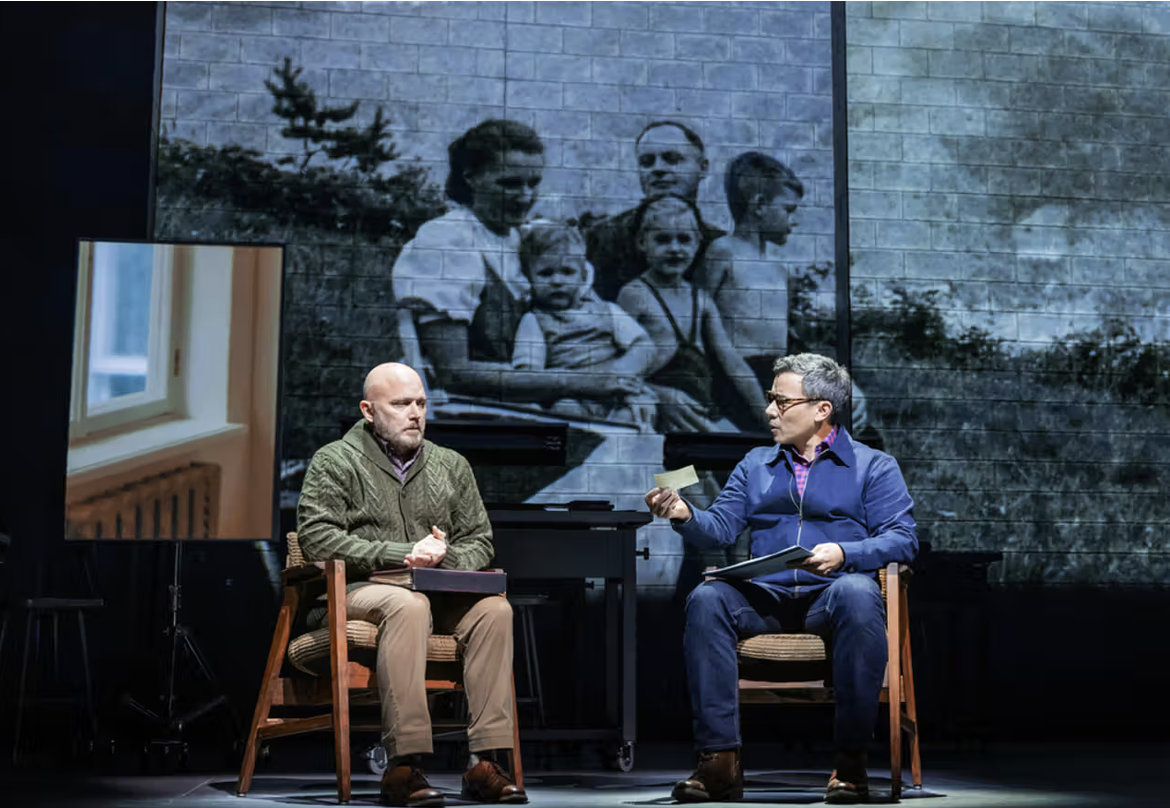
But what was so astounding was what it recorded: daily life for Nazis and their families at Auschwitz, a key posting. The Höcker album includes 116 pictures taken in and around Auschwitz between May 1944 and January 1945, during the mass extermination of Hungarian Jews. Höcker’s name doesn’t appear. Instead, museum historians identified Höcker, who served as the adjutant to Baer, the last commandant of Auschwitz.
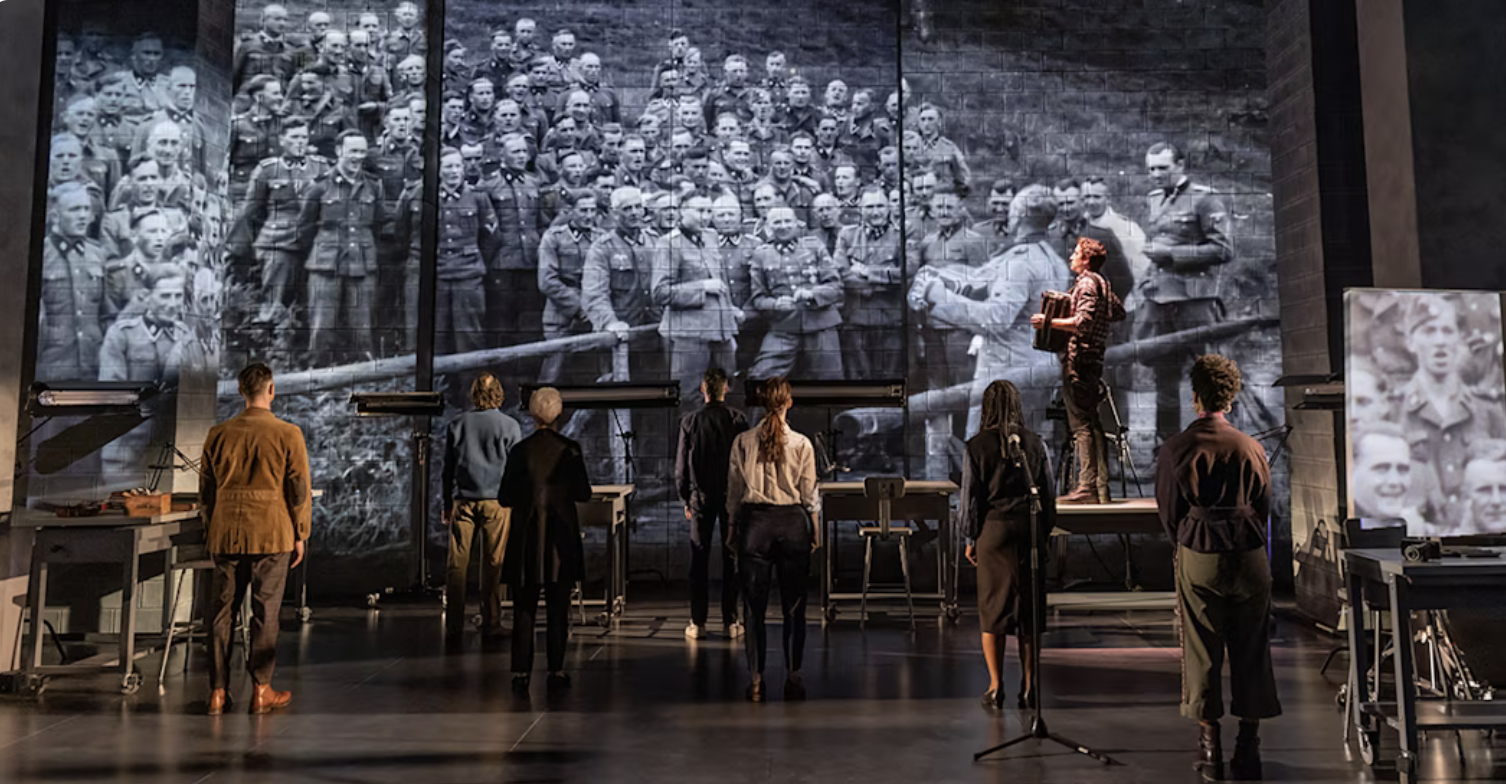
There are no photos of torture or prisoners. Rather, it is Germans, male and female, carrying out genocide in an atmosphere of pleasantry. A special mountain resort, Solahütte, was constructed so they could relax, often earning days for shooting escapees. There are scenes of official visits and social gatherings: picnics with colleagues, children riding toy boats.
In the 15-mile perimeter that was the concentration camp, German officers lived ordinary lives. Yet just over the wall, or a few kilometers away, sat the telegraph office, staffed by young women, SS female auxiliaries known as Helferinnen, who received extermination orders.
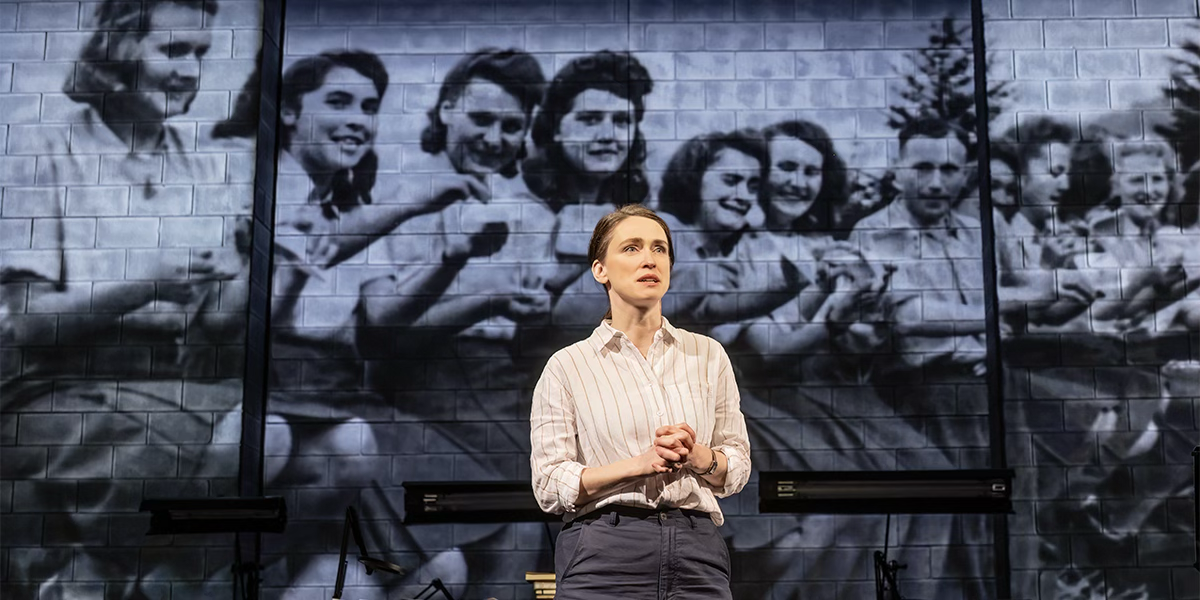
And that’s Kaufmann’s point: Making Nazis into monsters removes them from the human family. These men were all too human, believing mass murder was a duty and a calling, not an act of barbarism. Before joining the SS, Höcker was a bank teller, Baer a pastry chef.
Here There Are Blueberries, a Tectonic Theater Project, is meticulous in its search for truth. Its superb cast includes Michelle Beck, Michael Cerveris (as Peter Wirths, the son of the SS chief camp physician, who grew up near Auschwitz), Brandon Flynn, Montego Glover, and Conrad Ricamora. The actors, who play multiple roles, do justice to the story. Shame, horror and often, a refusal to acknowledge culpability, is part of Blueberries.
The searing show, deftly directed by Kaufman, is chilling in its accuracy. It functions both as historic record, a compelling detective story, and the realization that history is a living, organic reality. What we might term Nazi selfies are jarring — so is what eventually happens to them. Some are tried, some, like Mengele, escape to Brazil or resume their former lives in Germany, while survivors and their heirs live with a tortured past.
The Here There Are Blueberries creative team includes scenic design by Derek McLane, costume design by Dede Ayite, lighting design by David Lander, sound design by Bobby McElver and projection design by David Bengali. Each creative element is perfectly calibrated for maximum dramatic effect.
A finalist for the Pulitzer Prize in 2024, Blueberries deserved the award. More importantly, this brilliant piece of writing deserves a longer run. Attention must be paid.
Here There Are Blueberries
At the Barrymore Theatre
243 West 47 St.
Running time: 90 minutes, no intermission
Through Jan. 10, 2027