Wanted
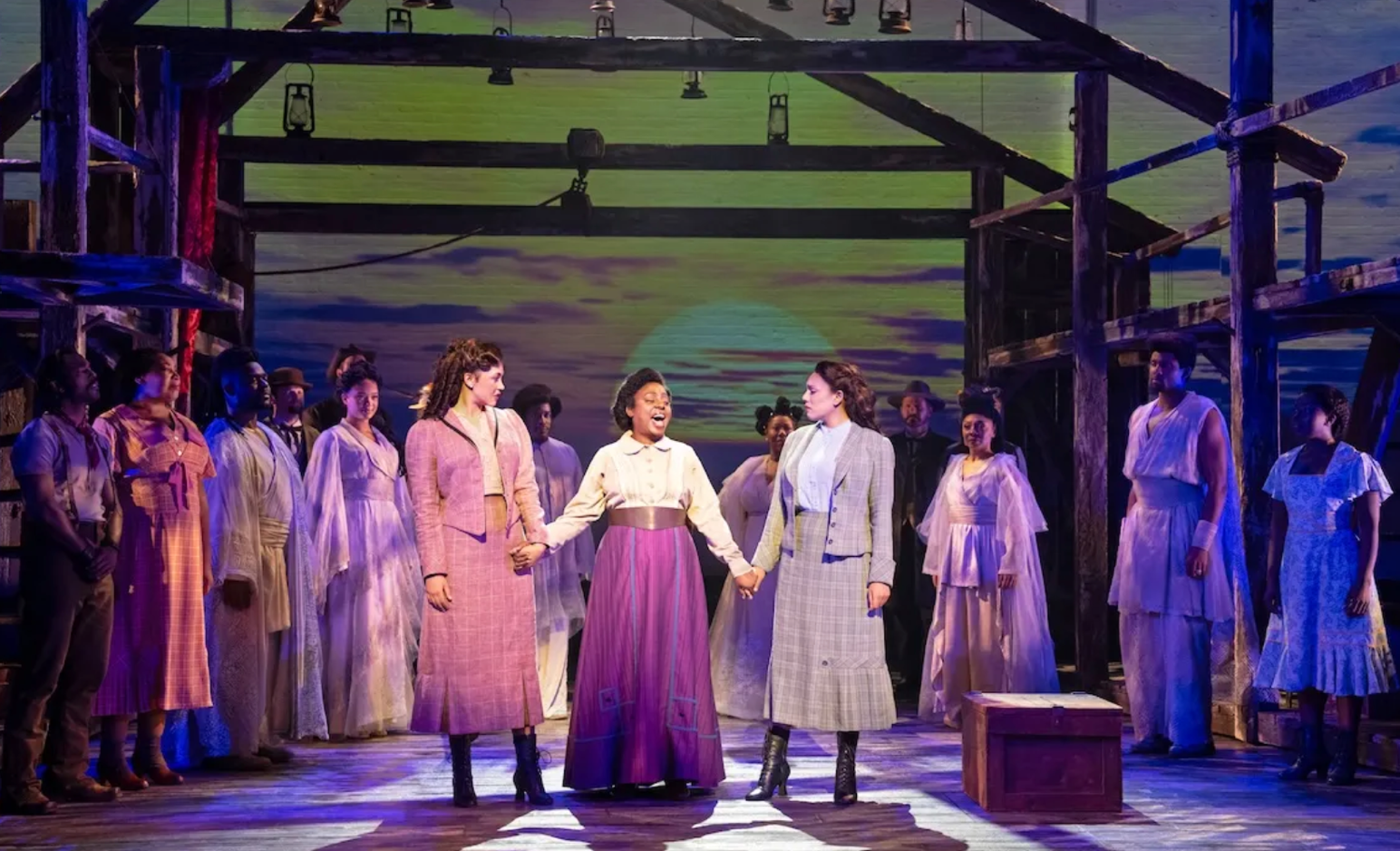
Wanted, the gloriously messy new musical at the James Earl Jones Theatre, is a story about sisterhood, identity, and the masks we wear to survive. Set in 1893 Texas, it follows Mary (Solea Pfeiffer) and Martha Clarke (Liisi LaFontaine), two Black twin sisters who pass as white while turning to life as frontier outlaws to save their family’s future. With extraordinary singing, a compelling story, and more than a few rough edges, Wanted is an ambitious musical that surprised me in ways I didn’t expect.
I walked into the theater having repeatedly been told that “only the singing is good.” I was pleasantly surprised. And, at times, genuinely shocked.
With book and lyrics by Angelica Cherí, a great-great-niece of the real Mary and Martha Clarke, and music by Ross Baum, Wanted is inspired by the folklore surrounding the two sisters. The result is a Western that is considerably more than its advertising might suggest. At its heart, this is a story about family, freedom, and what happens when we begin hiding who we are to become someone else.
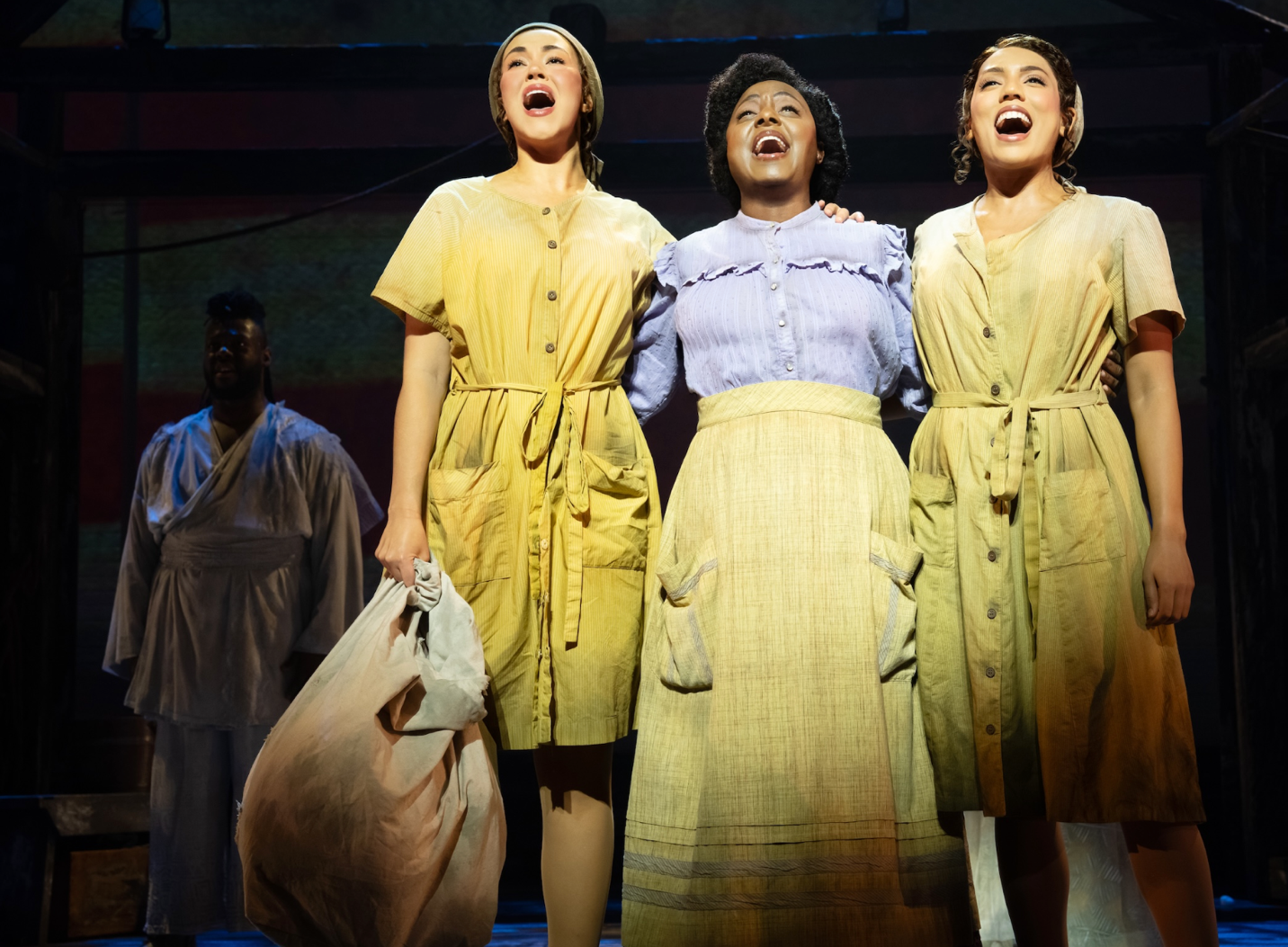
First and foremost, the singing is extraordinary. The performers deliver some of the most phenomenal vocals I’ve heard on a Broadway stage, blending gospel, rock, and Golden Age musical theater. The score occasionally reaches for a contemporary sound that doesn’t always fit comfortably with the story, but the sheer vocal talent onstage is undeniable. I cannot remember the last time a final number sent chills down my spine through the power of its singing alone.
Mary and Martha initially set out to help their mother Tallulah (Grammy Award winner Ledisi) secure the family’s future, eventually turning to crime after discovering both the financial rewards and the thrill of living outside society’s rules. Mary falls for Jesse (Bradley Jaden), a white saloon and hotel owner and a former enslaver. Their relationship becomes increasingly complicated as Mary conceals her ancestry and Martha grows determined to leave, unwilling to abandon the identity and history her sister seems increasingly desperate to escape.
The show does not shy away from racism. Rather than relying on offensive language, it allows the attitudes, assumptions, and treatment of its characters to tell the story. The moments when others discover that Mary and Martha are Black women carry considerable weight. What initially seems like an opportunity for the sisters to reinvent themselves becomes a dangerous game of deception.
There is also an unmistakable irony in the production’s home. The James Earl Jones Theatre is one of Broadway’s most ornate venues. Above its proscenium hangs an elaborate 18th-century French-style mural depicting Versailles and figures associated with the French monarchy. In a musical about Black women navigating a society designed to deny them power and opportunity, the juxtaposition is difficult to ignore. One could hardly ask for a more visually ironic setting.
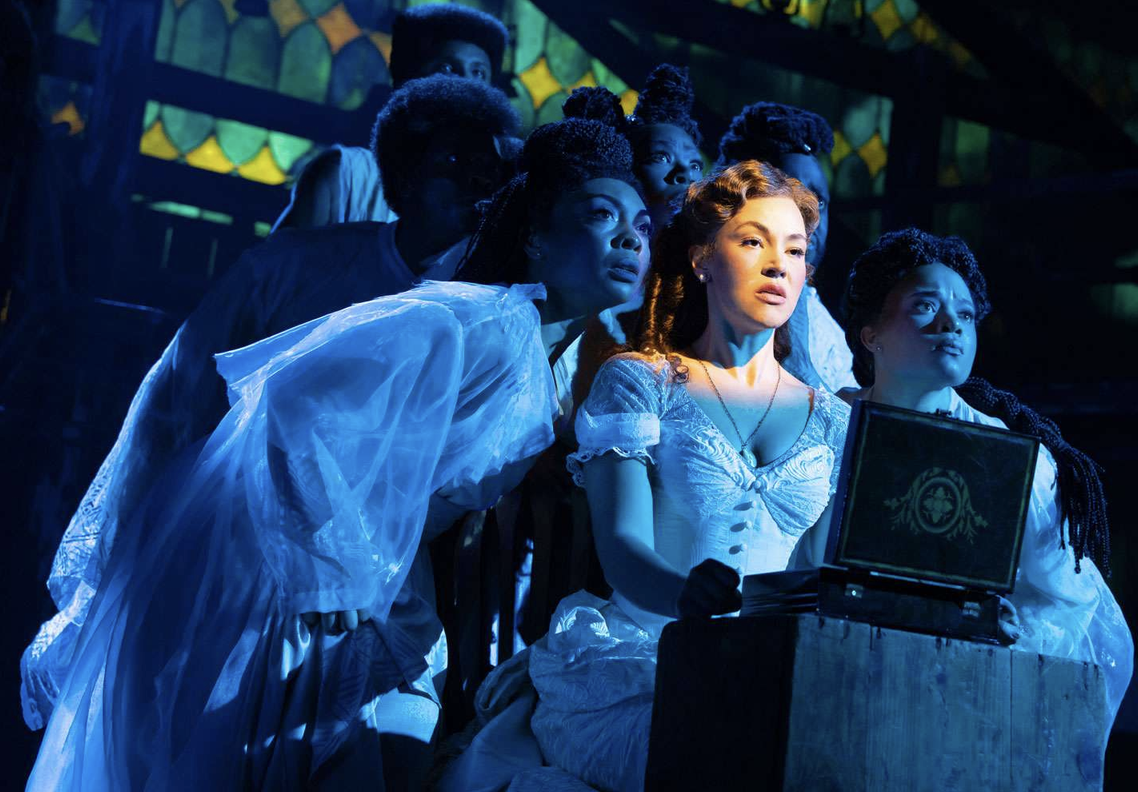
Of the principal characters, Elijah (Luke James) caught me most off guard. Initially introduced as an unassuming barhand in Jesse’s establishment, he gradually emerges as a man who wants something that should already be his: freedom. A formerly enslaved man, Elijah repeatedly emphasizes that he is “free, but not fully free.” His unexpected romance with Martha becomes one of the show’s more compelling relationships. Both characters understand that being legally free and actually living freely are two very different things.
Mary, meanwhile, takes the opposite path. Her relationship with Jesse leads her toward marriage and an increasingly desperate desire to conceal her ancestry. She seems determined to enter a world that would never willingly accept her as she is. The contrast between the sisters raises an uncomfortable but fascinating question: What happens when we become so determined to escape our past that we begin denying the very people and history that made us?
The ancestors, referred to as the “Kinfolk,” are another interesting element. Their presence establishes the importance of ancestry and those who came before. They are not always seamlessly incorporated. At times, they crowd the stage or distract from the action. At others, they provide welcome comic relief or represent a character’s internal struggle. One particularly effective moment comes when Mary applies additional powder before her wedding, attempting to make herself appear whiter. The Kinfolk make an already uncomfortable moment even more powerful, reminding us that the identity Mary is trying to conceal cannot simply be erased.
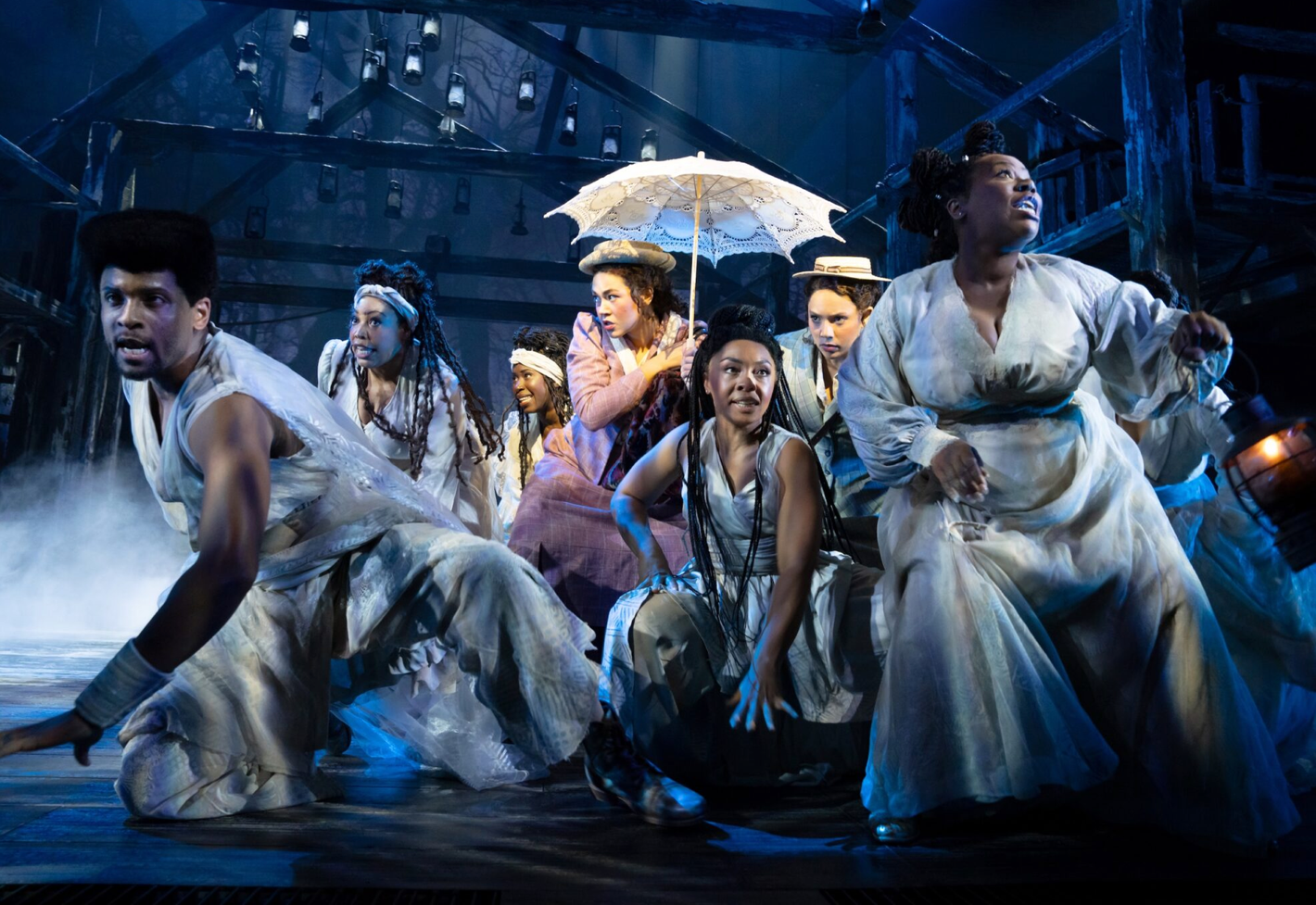
Technically, there is plenty to admire. Tony Award-winning scenic designer Beowulf Boritt creates an impressive world from a relatively simple set. Hinged structures swing inward and outward, transforming what initially appears to be a bare-bones barn into trains, banks, and other locations. Adam Honoré’s lighting and Emilio Sosa’s costumes are equally effective.
Unfortunately, the sound design by Gareth Owen leaves much to be desired. Vocals are frequently muddled, and lyrics occasionally become unintelligible. For a musical so dependent on its score, this is a significant problem. Stefania Bulbarella’s projection design is also overly busy, sometimes competing with the action rather than complementing it.
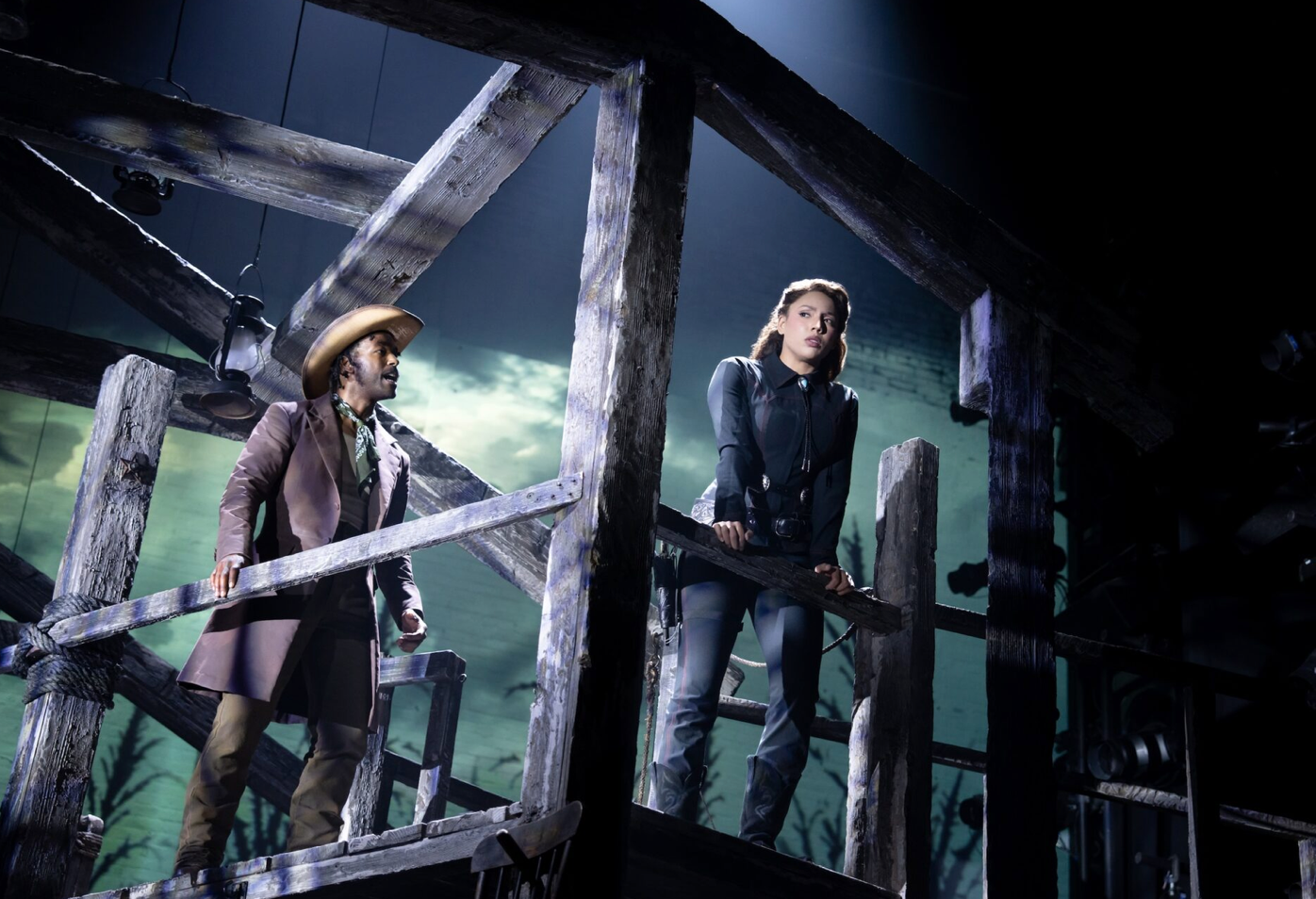
Director Stevie Walker-Webb makes good use of the entire stage, but the opening stretches feel unnecessarily crowded. Individual scenes are easy enough to follow, yet the overall production occasionally feels like a collection of loosely connected vignettes rather than one cohesive story. Still, the first-act curtain is particularly effective. Without giving anything away, its cliffhanger left me genuinely wondering where the story could possibly go next.
Wanted is still a mess. But perhaps that’s part of its charm. It is an imperfect musical telling an imperfect, complicated story. The singing alone is worth hearing, and the story offers plenty to think about long after the curtain falls. More than anything, Wanted possesses something many musicals could use more of: soul.
Wanted
At the James Earl Jones Theatre
138 W. 48th St.
Running time: 2 hours, 30 minutes, one intermission
Through March 31, 2027