Waiting For Lefty
As we enter the lobby of the Classic Stage Company, posters dominate the walls, commanding our attention: “Workers over Billionaires;” The Power of the People: A Stronger Tomorrow”; Union Yes”, “America Was Built By Labor.” So before we even enter the auditorium, we expect a conflict. That anticipation intensifies as we take our seats and actors pass out leaflets of protest.
To strike or not to strike? That is the question that drives Waiting For Lefty, Clifford Odets’s 1935 gem (his very first play) now being given a rousing revival at CSC. It’s a stand-out production in this fall theatre season, featuring the exciting directorial debut of Steven Pasquale, whose vision of its relevance today has revitalized a long-neglected American classic.
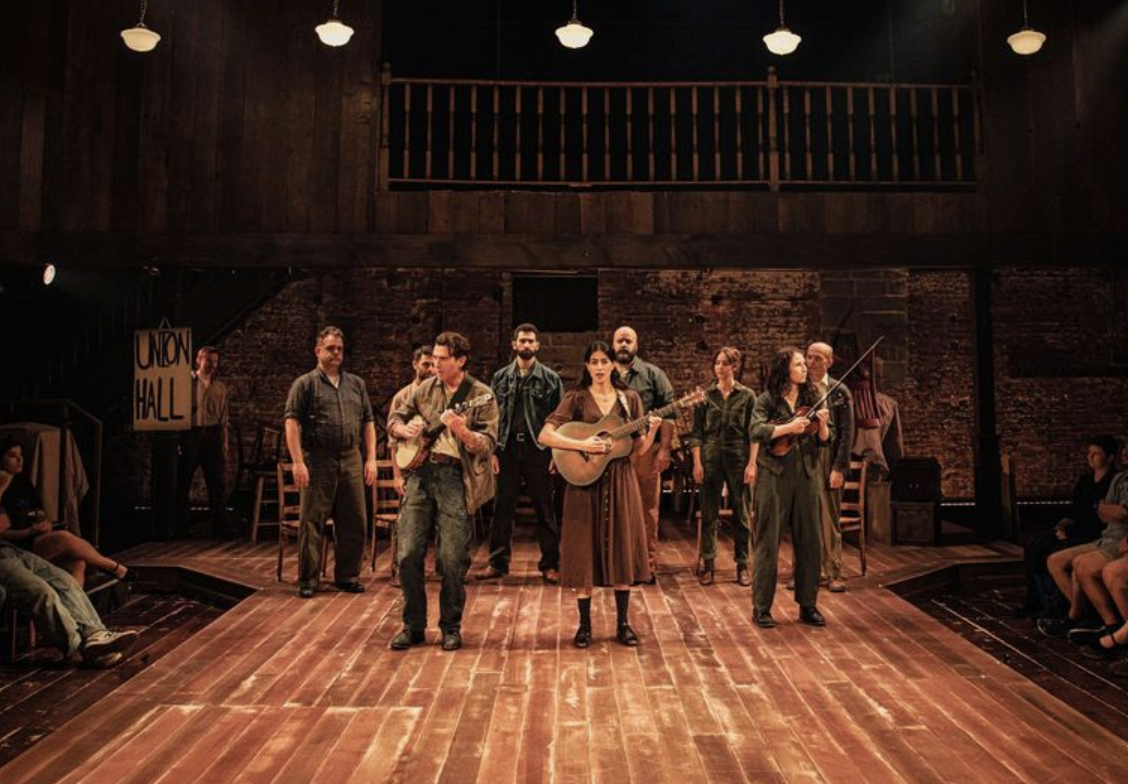
Pasquale has transformed CSC’s intimate theatre space into a hotbed of American history: namely, the New York taxicab strike of 1934, when thousands of drivers lifted their angry voices against exploitation by their employers. The action takes place in a union hall, where the workers’ impassioned calls for a strike are met with opposition by the corrupt union leader (Harry Fatt, played by a recalcitrant Greg Hildreth). These confrontations alternate with two-character scenes, featuring the personal struggles (financial and marital) of some of the drivers and their partners, as well as flashbacks of workers in other industries of that period and their own struggles with their employers.
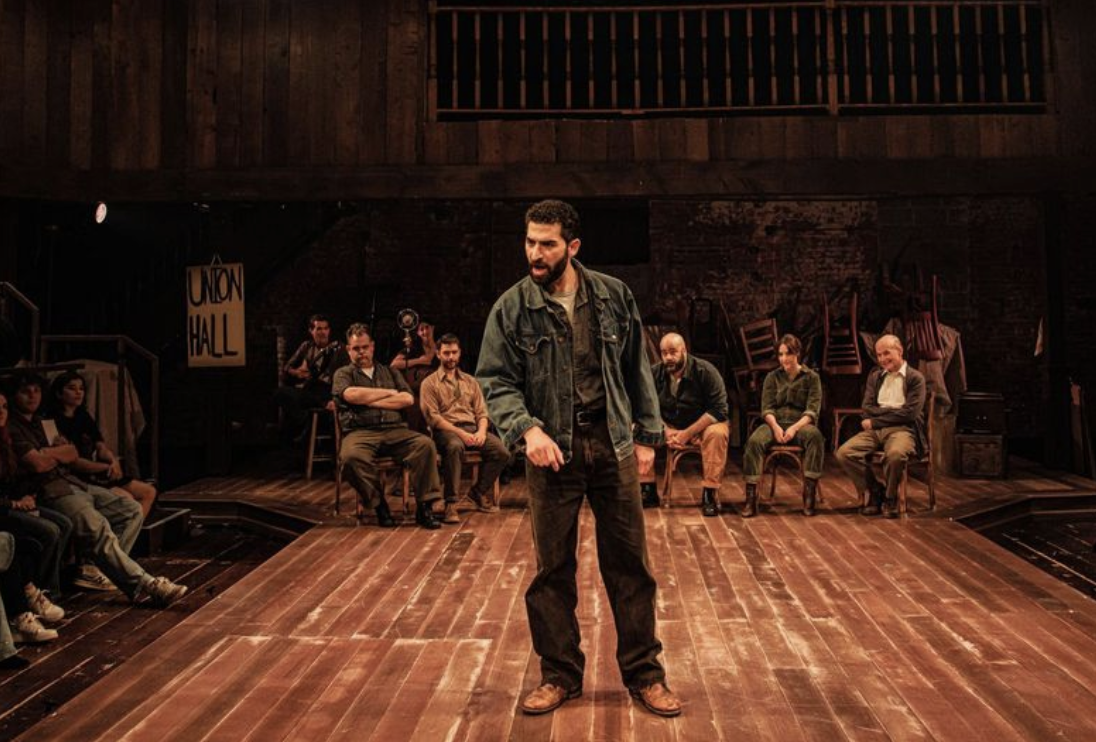
What makes Pasquale’s direction so exciting is his use of an ensemble of ten actor-musicians to tell the story through song and expressionistic choreography. The ensemble takes to the stage, featuring a series of wooden chairs for the union meeting and a pile of furniture upstage (scenic design by Scott Adam Davis). A spirited banjo and guitar duet, accompanied by two violinists, offers original music. They also perform selected period pieces that enliven Odets’s script (now stiffened with age) and provide the play’s most spirited and moving moments. The ensemble sings labor songs of the period, like “Brother, Can you Spare a Dime”, “Which Side Are You On?” and “Bread and Roses” (a feminist labor anthem from the 1910s).
As the stakes rise in the confrontation, company members, who play several roles, move throughout the theatre. Before we know it, we’re part of the union meeting too, crying out against injustice toward these persecuted workers. Above us hang rows of chandeliers (lighting design by Mextly Couzin) illuminating the conflict. All in all, it’s a thrilling seventy-five-minute ride (Odets wrote it as a one-act, and it brought him instant fame when it premiered in 1935).
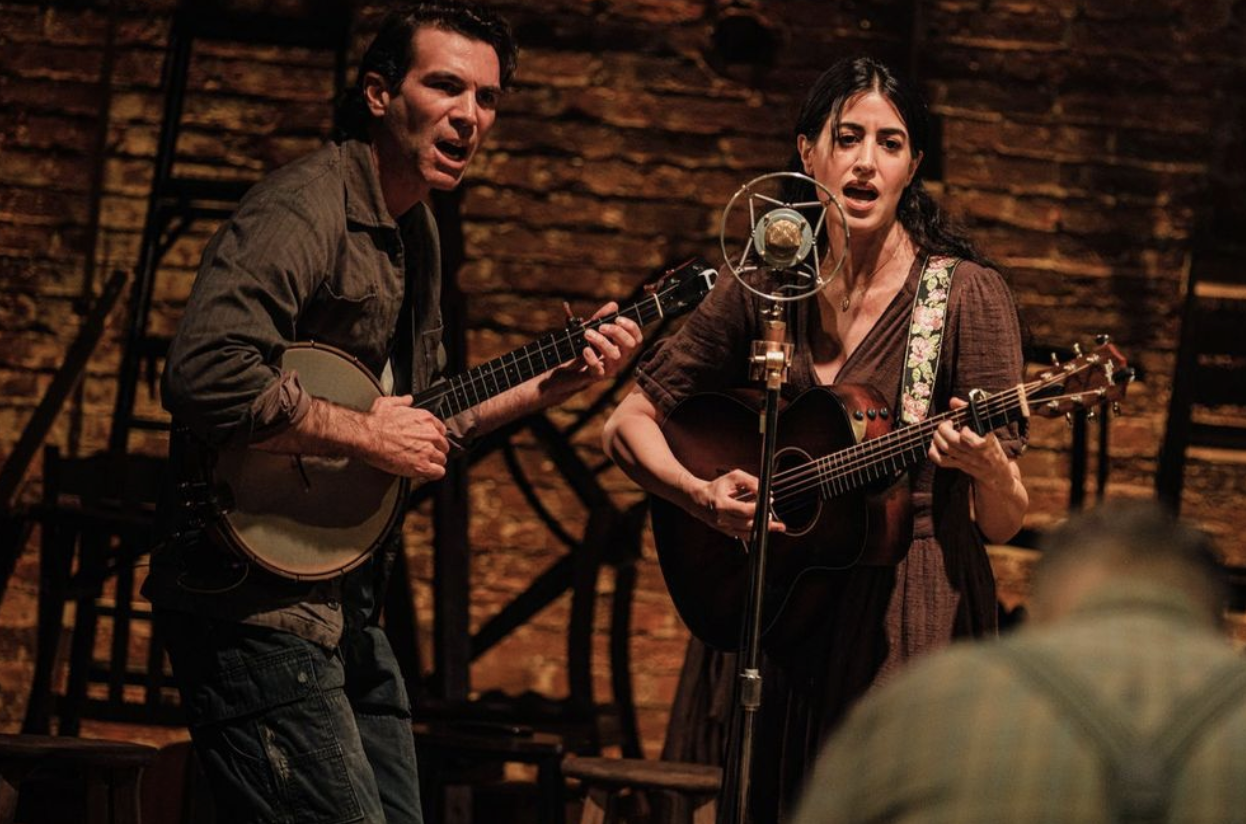
Special mention is owed to the husband/wife Yeller Tooth composers, Sahar Milani and Cameron Scoggins, not only for their memorable songs but also the touching scene they play as Florrie and Sid, a couple who have been engaged for three years but can’t afford to marry. Another duet features Joe and Edna (Raffi Barsoumian and Tala Ashe), wherein the wife berates her husband for his fear of standing up to the corrupt union leader. “Form your own union!” she cries. Other scenes, featuring flashbacks to other worker/employer conflicts tend to distract from the forward motion of the plot.
In the end, the ensemble carries the play to its momentous conclusion, thanks to Yeller Tooth’s music and the striking expressionistic choreography by Susan Misner. Pasquale’s innovative choices of music and movement lift the play out of its 1935 settings and give it a timelessness and universality.
Clifford Odets is enjoying unusual attention this season, with three high-profile revivals: Waiting for Lefty at Classic Stage, Awake and Sing coming up at Manhattan Theatre Club, and Golden Boy that just closed at the National Theatre in London. We are reminded of the admirable Group Theatre of the 1930s to which Odets belonged, along with Lee Strasberg, Harold Clurman, and Cheryl Crawford, and their rich contribution to American drama.
Yes, this is a revival that looks backwards, but it’s with the hope of spurring us forward. We leave the theatre with time to reflect on the extensive program notes and a message from Steven Pasquale, underscoring the revival’s relevance and his urgency to bring it to us. “We’re about to see in our lifetime the planet’s first trillionaire,” Pasquale warns, “and a new billionaire class of staggering wealth. Nineteen American families own more wealth than the bottom 50% of the entire country. … So we celebrate Odets by taking it off the shelf and blowing off the dust.”
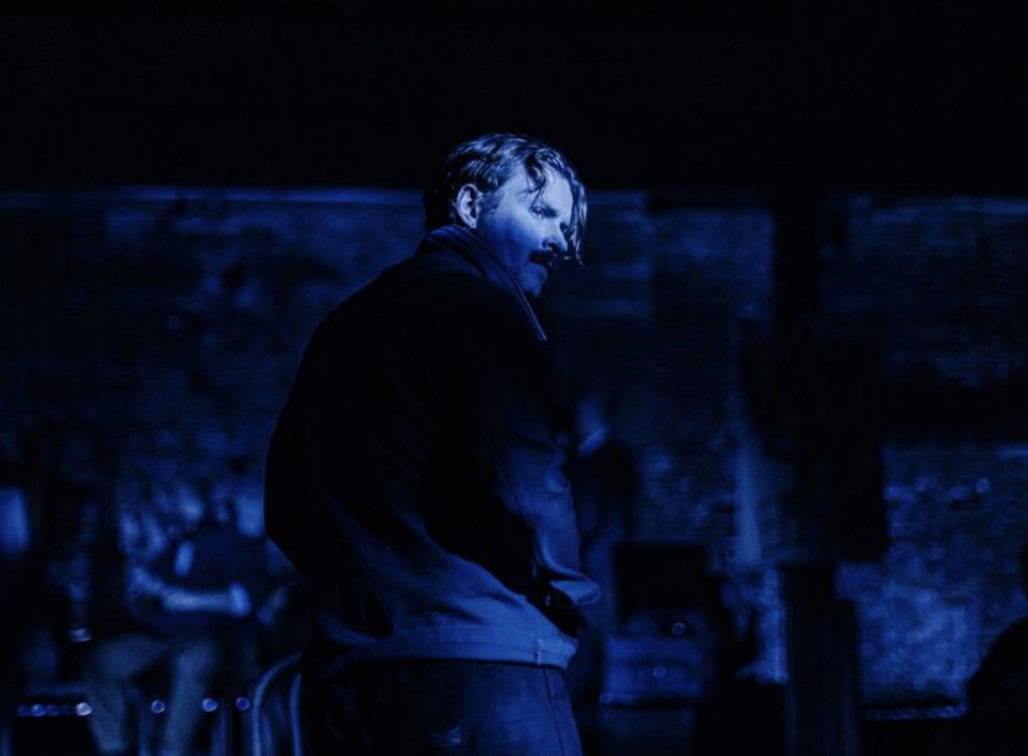
Meanwhile, here is a postscript regarding the play’s title: Lefty is apparently a union leader who the would-be strikers believe can lead them. In the original script, he never appears. But in Pasquale’s revival, he drifts wordlessly like a specter through several scenes (played by Zach McNally). Then comes the news that he has been killed. “Strike! Strike! Strike!” shouts the ensemble, before the final blackout.
So who are we waiting for, today?
Waiting For Lefty
At the Classic Stage Company
136 E. 13th St.
Running time: 1 hour 15 minutes
Through December 6, 2026