The Bald Soprano
The Bald Soprano, the landmark absurdist drama in eleven scenes, is now being presented for a limited engagement at The Sheen Center for Thought and Culture by The Resident Acting Company. That company evolved out of The Pearl Theatre Company, which, in 2011, was the last professional company to produce The Bald Soprano in New York.
Following its premiere in Paris in 1950, The Bald Soprano — the first play (or “antiplay”) written by Romanian-born, French-based playwright Eugène Ionesco — opened at Théâtre de la Huchette in 1958. It still holds the world record for the longest continually running play in the same theater. It has also become a defining work and mainstay of Theatre of the Absurd, the post-World War II existentialist genre of the 1950s-60s, which confronts the meaningless irrationality of life and the nonsensical nature of humanity’s inherent lack of communication and understanding.
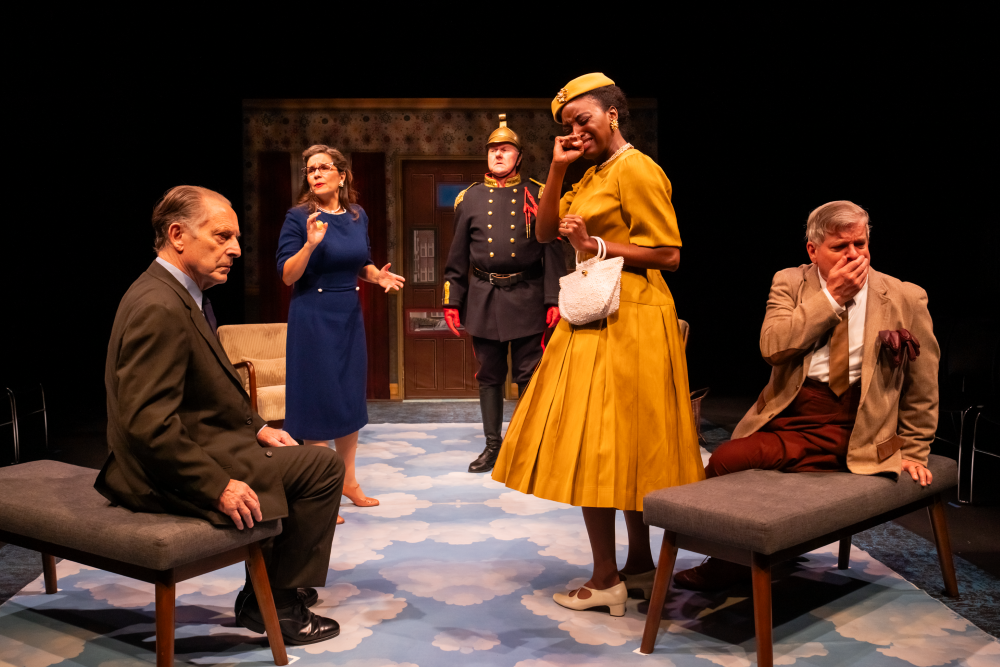
Directed by Artistic Director Bradford Cover, the current production masterfully delivers all the laughably purposeless conversations of six ordinary people who come together for a typical evening that underscores bourgeois banality and defies both reason and individualism (e.g., every member of one family they discuss is named Bobby).
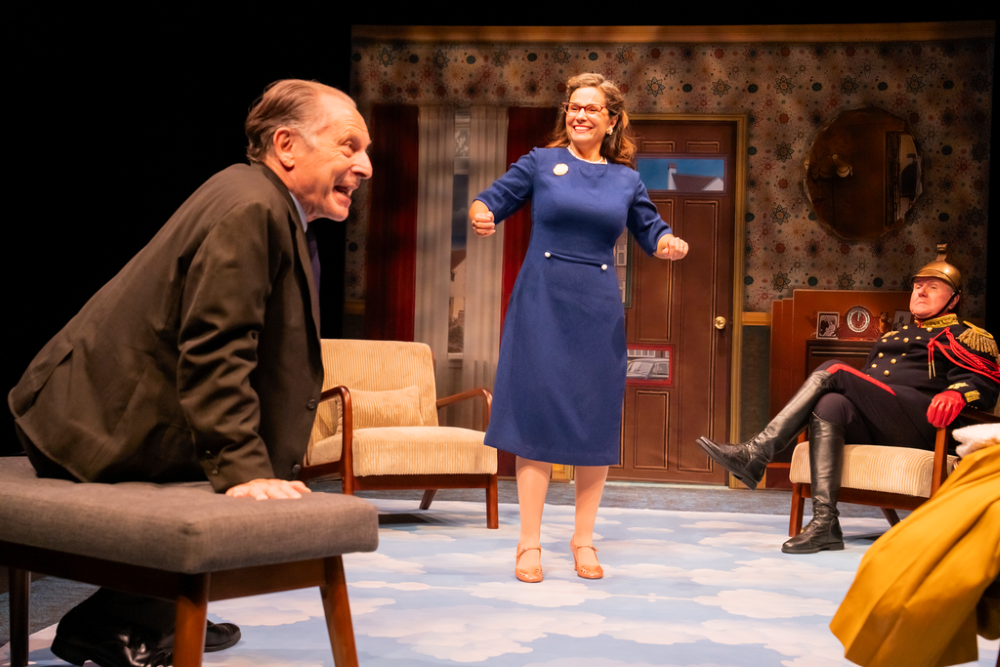
Ionesco noted that he was inspired to write the play while taking English lessons. Consequently, the show is set in the parlor of a mid-century home in England (set by Harry Feiner) and is filled with random British references – most of which make little contextual sense but contribute to the wildly comical mood.
The stellar cast of six – Dominic Cuskern and Rachel Botchan as the Smiths, Andy Paterson and Anique Clement as the Martins, Carine Montbertrand as Mary the maid, and Dan Daily as the Fire Chief – all wear vintage-style costumes (by Jeremy Pitzer) and assume accents indicative of their positions and classes (Mary’s is more clearly Cockney, the others more genteel). They all play off each other with telling facial expressions, changes in vocal tone, and spot-on timing. Their trivial talk, inane exchanges, and verbal non-sequiturs, confused contradictions, and endless repetition, with some all-too familiar mundane clichés thrown into the mix, devolve into babbling. The result is total linguistic chaos, with a surreal sensibility of ridiculous illogic engendered by biting emptiness and a tenuous grip on reality.
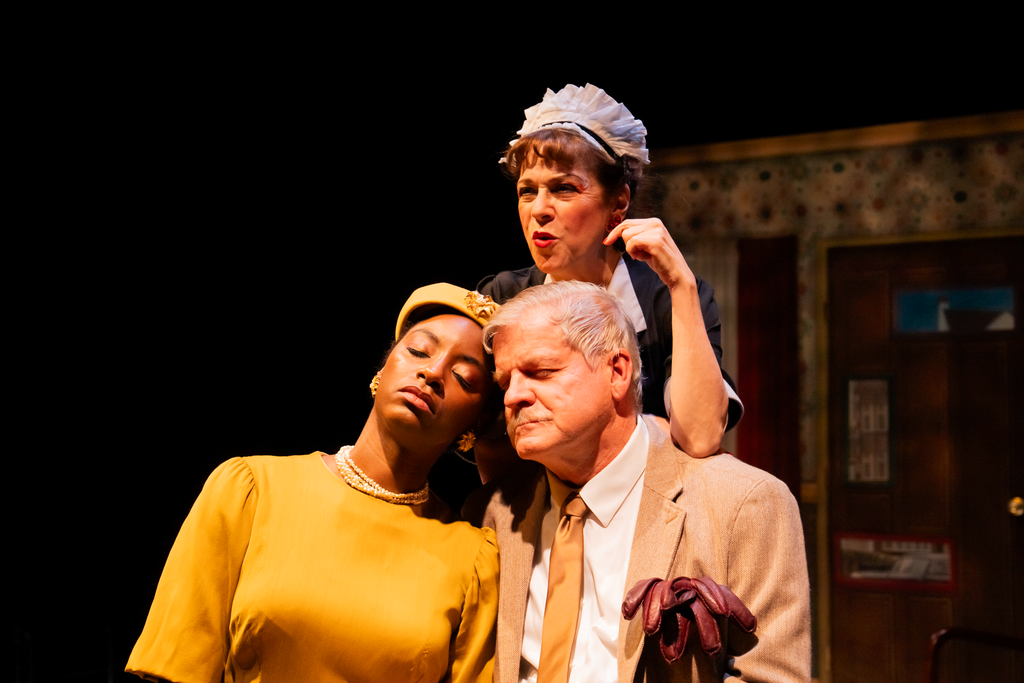
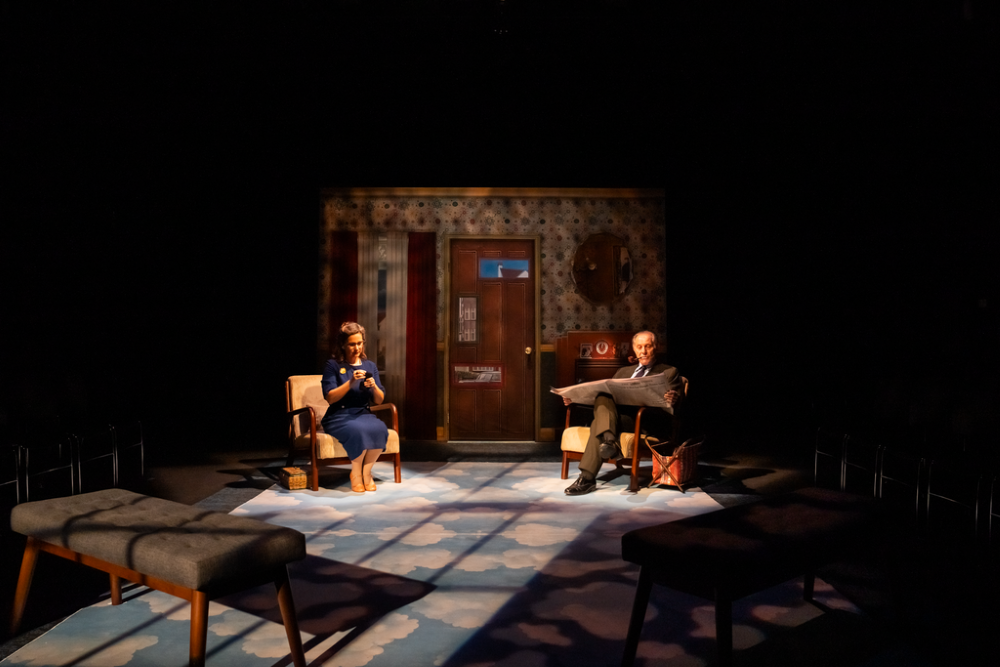
Under Cover’s expert direction, the couples, at first seated and soft-spoken, then standing and moving around and off the stage, become increasingly agitated and loud, insulting and confrontational. Botchan and Cuskern initially convey the physical and emotional distance and psychological disconnect of the Smiths, as he sits reading the newspaper, smoking his pipe, and clicking his tongue while she rambles on about dinner. Clements and Paterson as their guests the Martins can’t recall that they know each other while waiting for the Smiths to receive them – but then uncover a series of “curious” and “bizarre” “coincidences” as they converse, leading them to realize they’re married. They are challenged for arriving late by Montbertrand’s outspoken, boisterous, and squealing Mary, who doubts, for the most unreasonable of reasons, that they do, in fact, have the same daughter (with one white and one red eye), and therefore asserts that they are not married.
Rounding out the all-in uproariously absurd company is Daily’s Fire Chief, who did or didn’t ring the doorbell four times (sound by PJ Ju, who also provides the recurrent noise of the erratically striking clock, which is in no way indicative of actual time). There to investigate a non-existent fire in the house, he tells brief fallacious fables about animals and a long and demanding convoluted story about an extended family and their genealogical interconnections without missing a beat. Upon exiting, he inexplicably brings up the titular “bald soprano” (eliciting a classic absurdist response from Mrs. Smith).
It all culminates in a frenetic climax of furious agitated movements and high-decibel screaming outbursts of similar sounding words and phrases by the Smiths and Martins, then concludes, after a blackout (lighting also by Feiner), with the play cycling back to the beginning but performed by the opposite couple (again reasserting the sameness and lack of individuality of the characters, and, by extension, of people in general).
While The Resident Acting Company’s outstanding presentation of The Bald Soprano is hilariously funny and seemingly irrational, it’s also a prime example of meaningful absurdity. It offers an incisive view of the confusion of everyday existence and the universal absence of awareness and cognition that dominates life, relationships, and the world – both in Ionesco’s time and in our present unsettling climate of socio-political estrangement and derangement.
The Bald Soprano
At The Sheen Center for Thought and Culture, Frank Shiner Theatre
18 Bleecker St.
Running time: 65 minutes, no intermission
Through November 1, 2026