School Girls: or, the African Mean Girls Play
Manhattan Theatre Club has burst onto the stage in this new season with a hyper-energetic, entertaining play, inspired by a true story with a warning that needs to be heeded.
School Girls: or, the African Mean Girls Play is called a comedy, but its implications are far from humorous. It dramatizes a malaise familiar to anyone who has attended high school anywhere: namely, bullying. But playwright Jocelyn Bioh sees that disturbing social syndrome as a symptom of broader, universal societal illnesses, including competition, corruption, cruelty, and corrosive colorism.
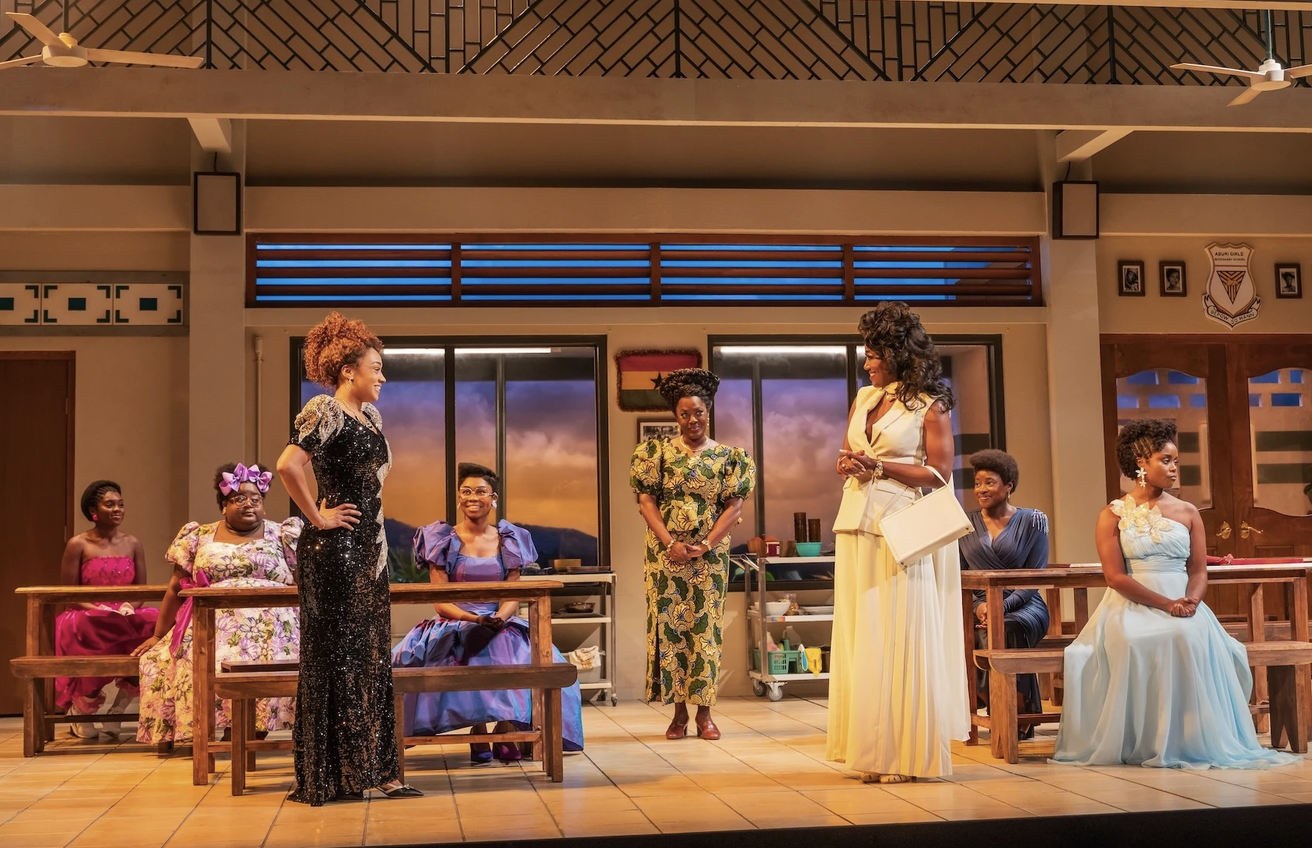
The scene is Aburi Girls Boarding School, located in the mountains of central Ghana. The year is 1986. We meet a gaggle of young girls, frenzied with excitement over a momentous event: the impending arrival of the recruiter for the Miss Ghana beauty contest. The recruiter will select one student for the national competition; if she wins, she will go on to the semi-finals for the title of Miss Global Universe.
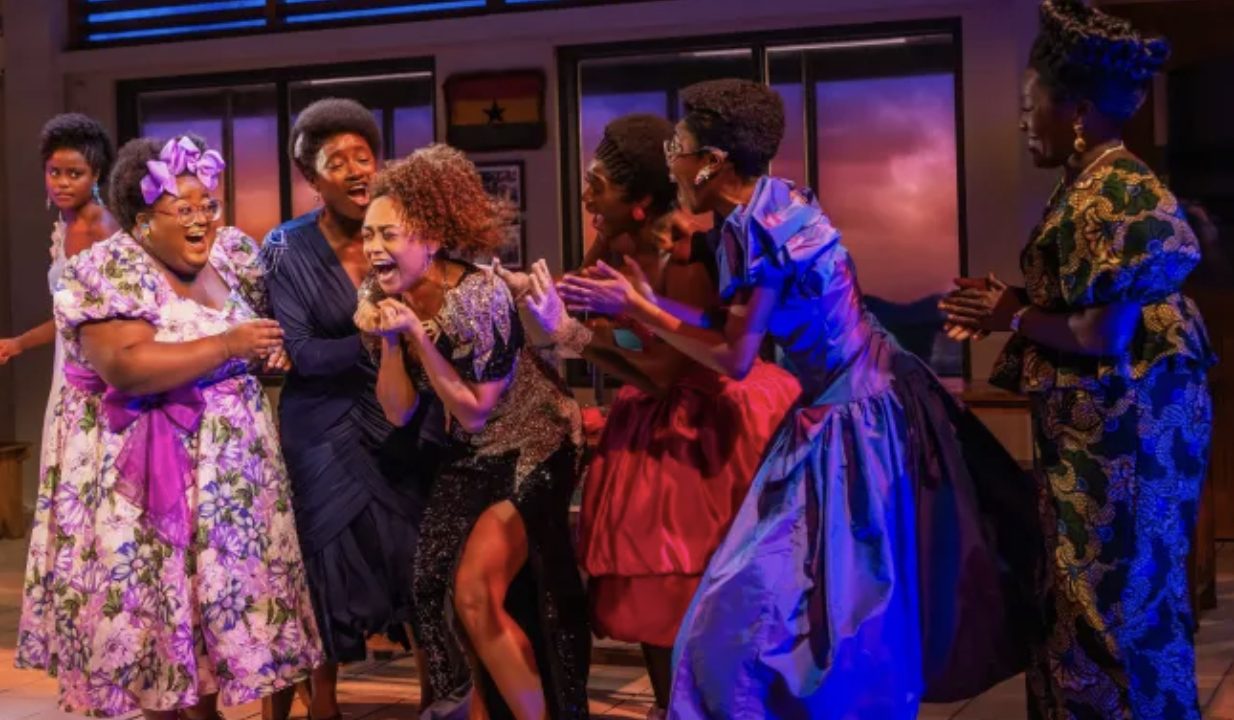
Believe me: the energy of these eager girls could blow off the roof of the Samuel J. Friedman Theatre. From the get-go, their leader, the gorgeous Paulina, reigns supreme. Imperious and arrogant, Paulina (Denee Benton) is the ultimate “mean girl,” reigning over her little group like a dictator. We watch her devastate each member with withering ridicule, while they, in return, cower before her in adoration and fear. “I protect you,” Paulina explains, justifying her cruelty. The chubby Nana (Erin Morton) is Paulina’s favorite target. She’ll take any humiliation Paulina imposes, grateful for her protection (Nana habitually hides food from the cafeteria and is constantly in detention). There’s Ama (Lucia Aremu), who enjoys the status as Paulina’s best friend, and the cousins Mercy and Gifty (Jordan Rice and Nia Otchere-Sarfo), two other subordinates.
From the play’s first moment, Paulina declares that she’ll undoubtedly be the recruiter’s choice for the Miss Ghana contest. “College is cute,” she explains, “but I’m thinking about my future.” Her dream is to become a model (“the next Iman”) and marry Kofi, a Ghana Black Star soccer player (a romance she’s completely fabricated to enhance her image). Secretly, she has been applying skin lightener cream to make herself a more competitive candidate.
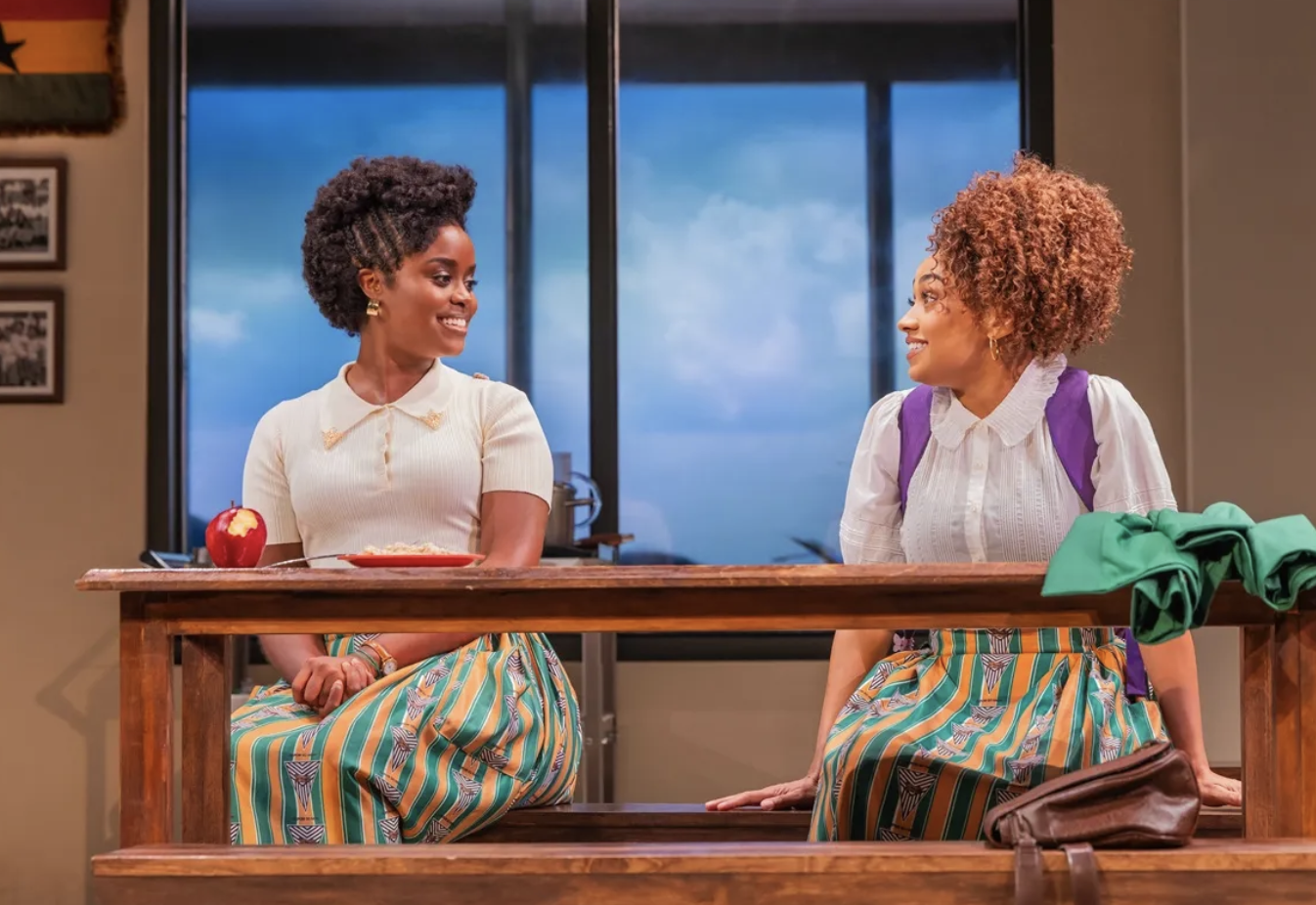
But Paulina’s dream is threatened by the unexpected arrival of Ericka, a new student (Jasmine Amy Rogers). She is introduced to the group by Headmistress Francis (Heather Alicia Simms). Lively and light-skinned, Ericka’s background is different from the others. The daughter of a famous cocoa farm owner in Ghana, Ericka was raised in the United States. The others are dazzled by her sophistication (she’s eaten at White Castle restaurant! She owns clothes from Walmart!). Ericka offers to host a “make-over party” for her new friends, supplying beauty products from America.
Alarmed by Erika’s poise and, above all, light skin, Paulina hatches a plan. She blackmails the intimidated Nana to break into the Headmistress’s office and steal Ericka’s file, suspicious that her background might disqualify Ericka from participating in the contest. When the frightened Nana complies, the latter responds with the greatest cruelty; she expels Nana from the group. “Come check in with me when you’ve dropped about 15-20 pounds.”
In Part Two, Eloise the recruiter (a flamboyant Patina Miller) arrives with a flourish. The former Miss Ghana 1966, Eloise reveals her powerful personal agenda: if she recruits a winner, Eloise will receive a promotion, as well as a generous donation to pass on to the school. To Paulina’s dismay, Eloise immediately spots Ericka as her choice, justifying to the Headmistress that the judges prefer light-skinned candidates.
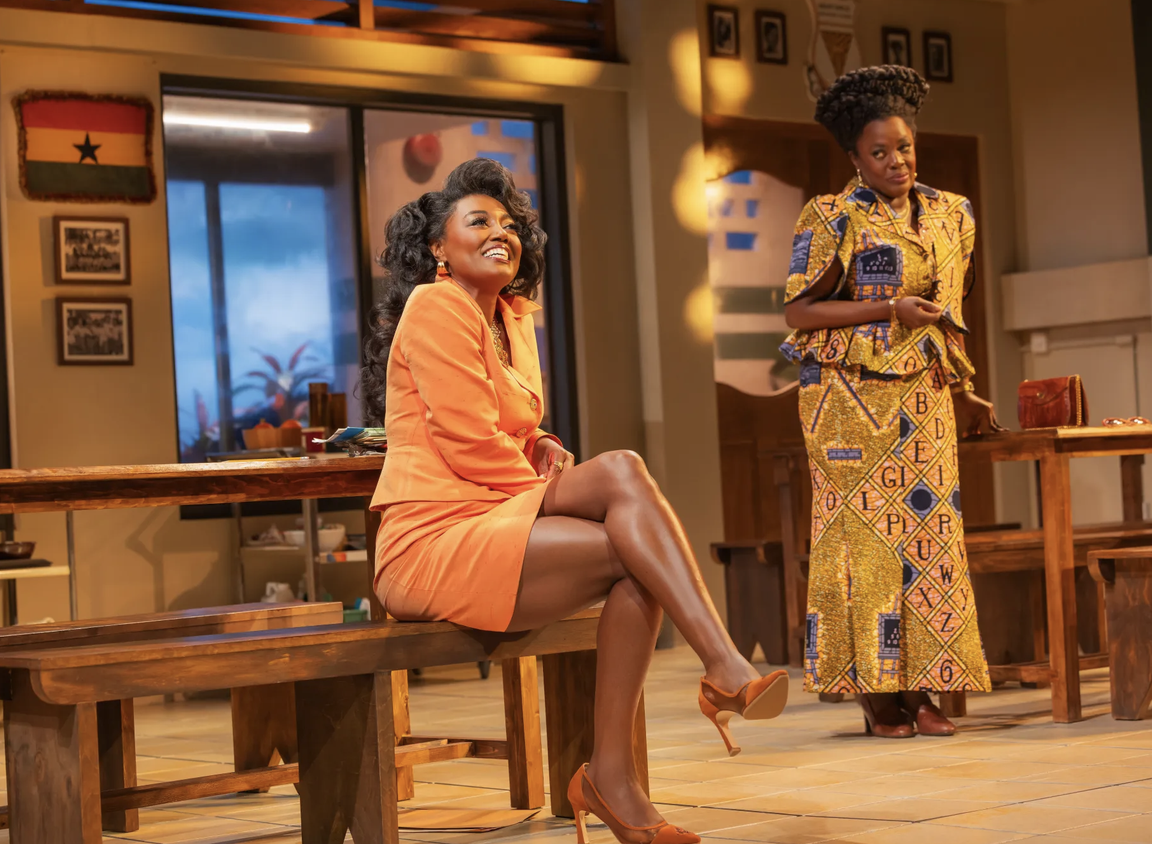
In the climactic Part Three, the auditions in the cafeteria provide the play’s most sensational scene. While the group sings “The Greatest Love” as back-up, Ericka shines as a soloist. An enraged Paulina attacks her, revealing that (according to the stolen file) Ericka is not a “real Ghanaian” and therefore can’t be a legitimate candidate, since she was born in the US and her mother was white. A violent physical fight breaks out between the two, interrupted by a dismayed Headmistress, who demands that they settle their dispute. The truth is revealed: Ericka is jealous of Paulina because, as a bi-racial, she’s never been fully accepted anywhere; whereas darker-skinned Paulina is ashamed of her own humble origins. “You are better than me,” Paulina admits, nursing her blistered face, damaged by the skin lightener. Eloise returns to announce that, though the committee would disqualify Ericka, she will nominate her anyway and not disclose her true background. “You can’t get anywhere in the world by playing fair,” Eloise cries.
In the play’s epilogue, time has passed. Ericka has been chosen Miss Ghana. The girl-group assembles in the cafeteria to watch the 1986 Miss Global Universe Pageant show on TV. The top ten semi-finalists are announced; they are all white. Ericka is not among them. “All for nothing,” Nana declares.
Whitney White’s skilled direction provides us with a dynamite production, featuring an ensemble polished to perfection (set by Teresa L Williams, costumes by Qween Jean). But the final irony cuts through its entertainment value like a knife. We have witnessed the destructiveness of competition and colorism which continues in our world today.
All for nothing, indeed.
School Girls: or, the African Mean Girls Play
At the Samuel J. Friedman Theatre
261 W. 47th St.
Running time: 1 hour 20 minutes, no intermission
Through November 15, 2026